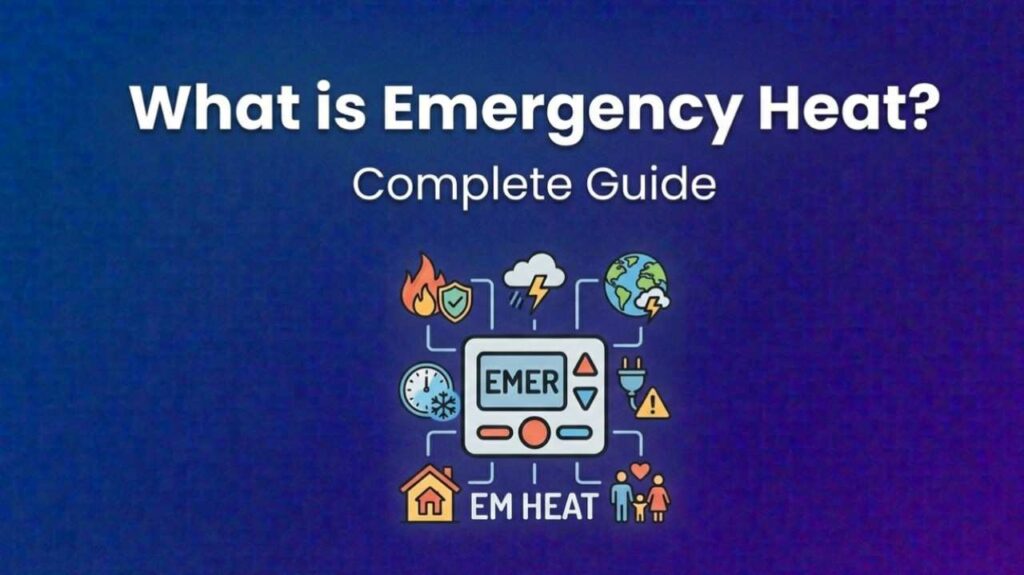
What is the Emergency Heat Setting – Emergency heat setting is a thermostat option found on heat pump systems. When activated, it bypasses the outdoor heat pump unit and relies on auxiliary heating sources (like electric coils or gas furnaces). This mode is less energy-efficient but ensures reliable heating during extreme conditions or equipment failure.
How Emergency Heat Works
- Normal operation: Heat pumps transfer heat from outside air into the home.
- Cold weather limitation: When outdoor temperatures drop too low, the heat pump struggles.
- Emergency mode: The system switches to electric resistance heating or a backup furnace.
- Manual activation: Homeowners can turn it on via the thermostat when needed.
Also Read-What is nonliteral language
When to Use Emergency Heat
- Heat pump failure: If the outdoor unit stops working.
- Extreme cold: When the heat pump cannot keep up with demand.
- System maintenance: While repairs are being made.
Benefits and Drawbacks
- Reliability: Ensures continuous heating.
- Safety: Prevents pipes from freezing in severe cold.
- High cost: Uses more electricity or fuel, making it expensive.
Emergency Heat vs. Auxiliary Heat
| Feature | Emergency Heat | Auxiliary Heat |
|---|---|---|
| Activation | Manual (thermostat setting) | Automatic (when heat pump needs help) |
| Purpose | Backup if heat pump fails | Support during very cold weather |
| Efficiency | Less efficient | More efficient than emergency mode |
FAQs : What is the Emergency Heat Setting
Should I leave emergency heat on all winter?
No. It’s only for extreme cold or equipment failure, as it’s costly to run.
How do I know if my system is in emergency heat mode?
The thermostat will display “Emergency Heat” or “E-Heat” when activated.
Is emergency heat the same as auxiliary heat?
No. Auxiliary heat automatically assists the heat pump, while emergency heat is manually activated.
Does emergency heat use more electricity?
Yes, it relies on resistance heating, which is far less efficient than a heat pump.