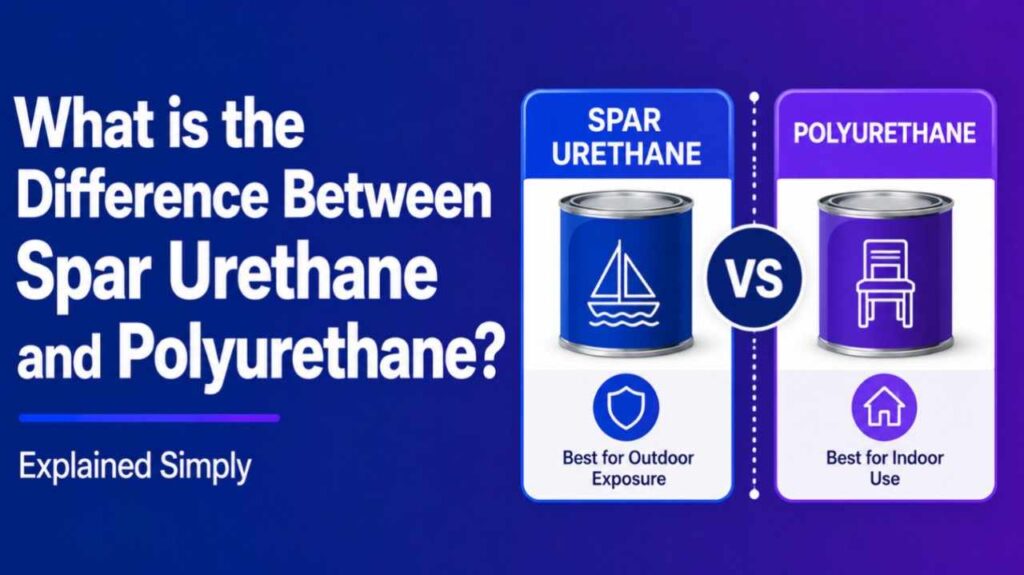
What is the Difference Between Spar Urethane and Polyurethane – When choosing a wood finish, understanding spar urethane vs polyurethane helps you pick the right protection for your project. Both are clear protective coatings, but they serve different purposes.
Spar Urethane
- Origin: Developed from marine spar varnish for boat masts.
- Key Features:
- High oil content for flexibility
- UV inhibitors to resist sun damage
- Strong water resistance
- Best Uses: Outdoor furniture, decks, boats, exterior doors, and trim.
- Types:
- Oil-based: Slower drying, yellows over time, stronger protection
- Water-based: Faster drying, clearer finish, less odor
Polyurethane
- Definition: A synthetic polymer finish that forms a hard, durable coating.
- Key Features:
- Excellent scratch and chemical resistance
- Less flexible than spar urethane
- Available in oil-based (rich, amber tone) and water-based (clear, quick-drying) forms
- Best Uses: Indoor furniture, cabinetry, floors, and tabletops
Also Read-What Is the Belt Sander Used For
Comparison Table
| Aspect | Spar Urethane | Polyurethane |
|---|---|---|
| Flexibility | High (prevents cracking outdoors) | Low (hard, rigid finish) |
| UV Resistance | Strong (contains UV blockers) | Weak (can yellow/crack outdoors) |
| Water Resistance | Excellent | Good, but less than spar urethane |
| Scratch Resistance | Moderate | High |
| Best For | Outdoor projects | Indoor projects |
FAQs : What is the Difference Between Spar Urethane and Polyurethane
Can I use spar urethane indoors?
Yes, but it may yellow and has a stronger odor compared to polyurethane.
Can polyurethane be used outdoors?
It can, but it lacks UV protection and may degrade faster in sunlight.
Which lasts longer?
Spar urethane outdoors, polyurethane indoors.
Oil-based or water-based — which is better?
Oil-based offers richer color and durability; water-based dries faster and stays clearer.