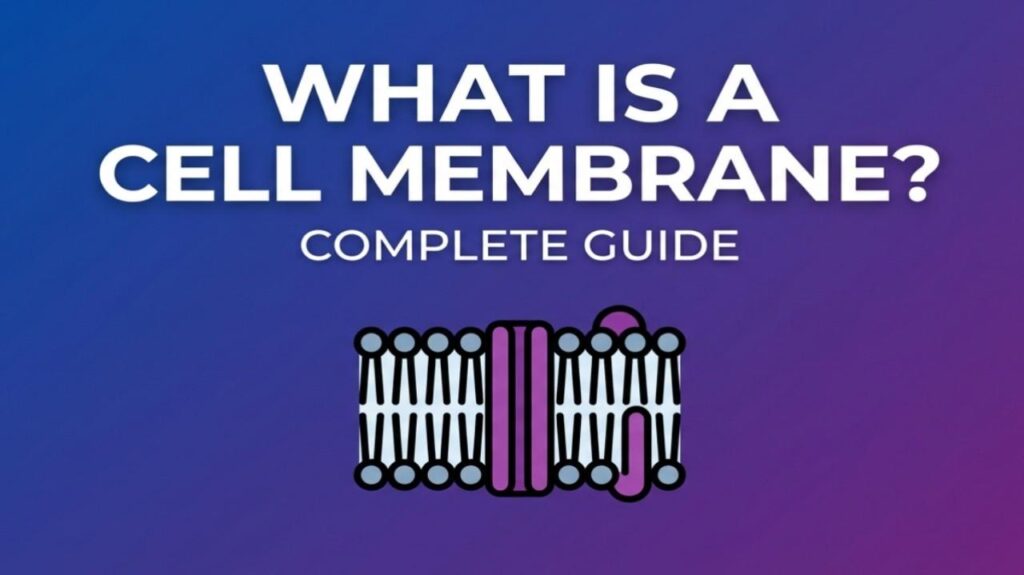
What Is The Color Of A Cell Membrane ? – The cell membrane does not have a natural color because it is microscopic and transparent. In scientific illustrations or under microscopes with staining, it may appear in artificial colors such as pink, purple, or green, depending on the dye or imaging technique used.
How It Works
- Structure: The cell membrane is made of a phospholipid bilayer with embedded proteins.
- Transparency: Because it is only a few nanometers thick, it has no visible color to the naked eye.
- Visualization: Scientists use stains, dyes, or fluorescent markers to make membranes visible under microscopes.
Examples of Artificial Colors
- Hematoxylin & Eosin stain: Membranes may appear pink or purple.
- Fluorescent dyes: Green, red, or blue depending on the marker used.
- Electron microscopy: Membranes appear as dark outlines due to contrast, not actual color.
Also Read-What Is A Pmax Campaign ?
Benefits of Coloring in Science
- Clarity: Helps distinguish membranes from other cell structures.
- Education: Makes diagrams easier to understand.
- Research: Allows tracking of proteins and molecules in live cells.
Comparison with Related Terms
| Structure | Natural Color | Lab Visualization |
|---|---|---|
| Cell Membrane | Transparent | Pink, purple, green (stains) |
| Nucleus | Transparent | Dark purple (H&E stain) |
| Cytoplasm | Transparent | Light pink or blue (stains) |
FAQs : What Is The Color Of A Cell Membrane ?
What is the natural color of a cell membrane?
It is transparent and invisible to the naked eye.
Why do textbooks show membranes in color?
Colors are added for clarity in diagrams and teaching.
Can we see the cell membrane without staining?
Yes, with advanced microscopes, but it appears as a faint outline.
Does the membrane’s color affect its function?
No, color is only for visualization; function depends on its structure and proteins.
.