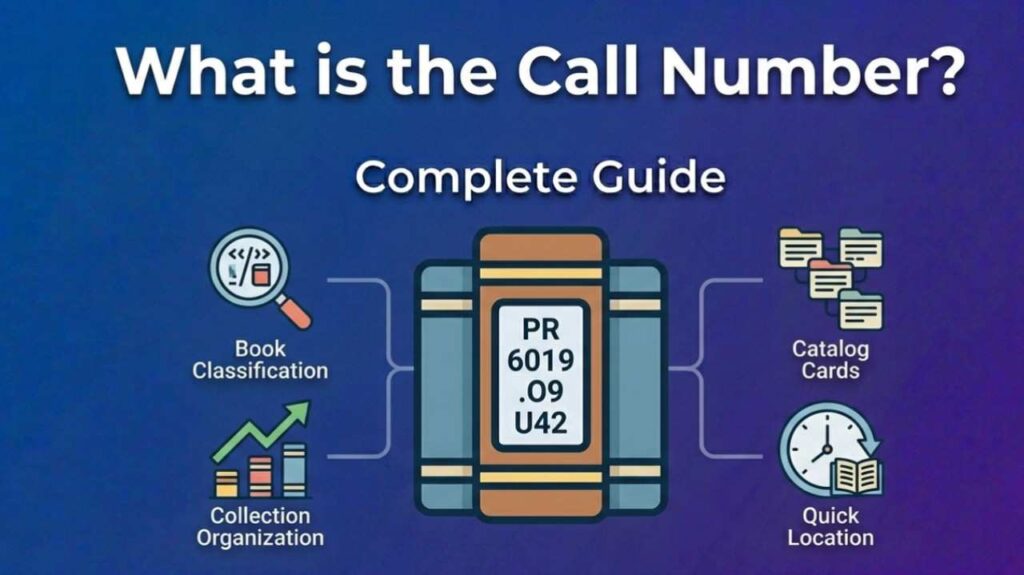
What is the call number refers to the unique code assigned to a book or library item that indicates its subject and location on the shelves. A call number is a classification label, usually based on systems like the Dewey Decimal or Library of Congress Classification, that helps organize and retrieve materials efficiently.
How the Call Number Works
- Classification system: Libraries use standardized systems to group books by subject.
- Unique identifier: Each book receives a call number that distinguishes it from others.
- Shelf location: The call number tells you exactly where to find the book in the library.
- Combination of elements: Often includes subject code, author initials, and publication year.
Types of Call Numbers
- Dewey Decimal call number: Numeric system (e.g., 813.54 for American fiction).
- Library of Congress call number: Alphanumeric system (e.g., PS3569 for American literature).
- Local call numbers: Custom codes used by smaller libraries or archives.
Benefits of Call Numbers
- Organization: Keeps millions of books arranged by subject.
- Accessibility: Makes it easy for readers to locate materials.
- Consistency: Standardized across libraries worldwide.
- Research efficiency: Helps scholars browse related works in the same section.
Also Read-What is E-Prime
Examples of Call Numbers
- Dewey Decimal: 641.5 → Cookbooks.
- Library of Congress: QA76.73.J38 → Books on Java programming.
- Local archive: HIS/VAR/1920 → Historical documents from Varanasi, 1920.
FAQs : What is the Call Number
Where do I find the call number of a book?
On the spine label or in the library catalog entry.
Are call numbers the same as ISBNs?
No, ISBNs identify books globally, while call numbers show library shelf location.
Can two books have the same call number?
Yes, if they cover the same subject, but author initials or year usually differentiate them.
Do e-books have call numbers?
Typically no, but some libraries assign virtual call numbers for cataloging.