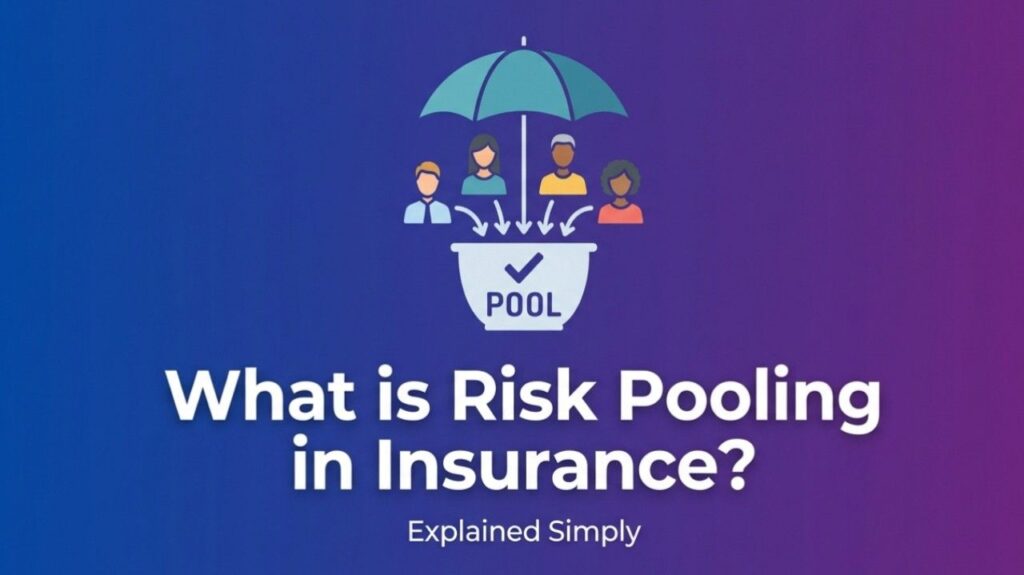
What is Risk Pooling in Insurance- Risk pooling in insurance is the practice of combining the risks and premiums of many individuals or entities into a shared pool. This spreads the financial impact of losses so that the costs of claims from a few are covered by contributions from the many.
How Risk Pooling Works
Insurance companies collect premiums from policyholders. They place these funds into a pool. When a covered event occurs — such as a car accident, medical issue, or home damage — the insurer pays the claim from the pooled funds.
Actuaries predict the likelihood and cost of claims across the group. Because not everyone experiences a loss at the same time, the pool remains stable. Larger pools with diverse risks improve predictability and help keep premiums affordable.
Benefits of Risk Pooling
- Makes insurance affordable by sharing costs.
- Reduces financial uncertainty for individuals.
- Allows insurers to cover large or rare losses.
- Promotes broader access to protection.
- Improves overall stability of the insurance system.
Examples of Risk Pooling
- Health Insurance: Healthy people’s premiums help cover medical costs for those who get sick.
- Auto Insurance: Safe drivers subsidize claims from those involved in accidents.
- Property Insurance: Homeowners in low-risk areas contribute to a pool that pays for claims from storms or fires.
- Reinsurance Pools: Insurance companies themselves pool catastrophic risks like hurricanes or earthquakes.
Also Read-What Is Inside of a Punching Bag
Risk Pooling vs. Individual Self-Insurance
Risk pooling differs from self-insuring, where one person bears their own full risk. Pooling transfers and shares risk across a group, making it manageable. Without effective pooling, premiums would be much higher or insurance unavailable for many.
FAQs : What is Risk Pooling in Insurance
Why is risk pooling important in insurance?
It spreads costs, makes coverage affordable, and allows insurers to handle unpredictable large losses.
Does risk pooling mean everyone pays the same?
Not always. Underwriting and risk classification adjust premiums, but the pool still shares overall losses.
What happens if the risk pool has too many high-risk people?
Premiums can rise, or insurers may need adjustments, subsidies, or regulations to maintain balance.
Is risk pooling only for health insurance?
No. It is the core principle behind all types of insurance, including auto, home, life, and commercial policies.
Can risk pooling fail?
Yes, through adverse selection (when mostly high-risk people join) or poor management, which is why regulations often require broad participation.