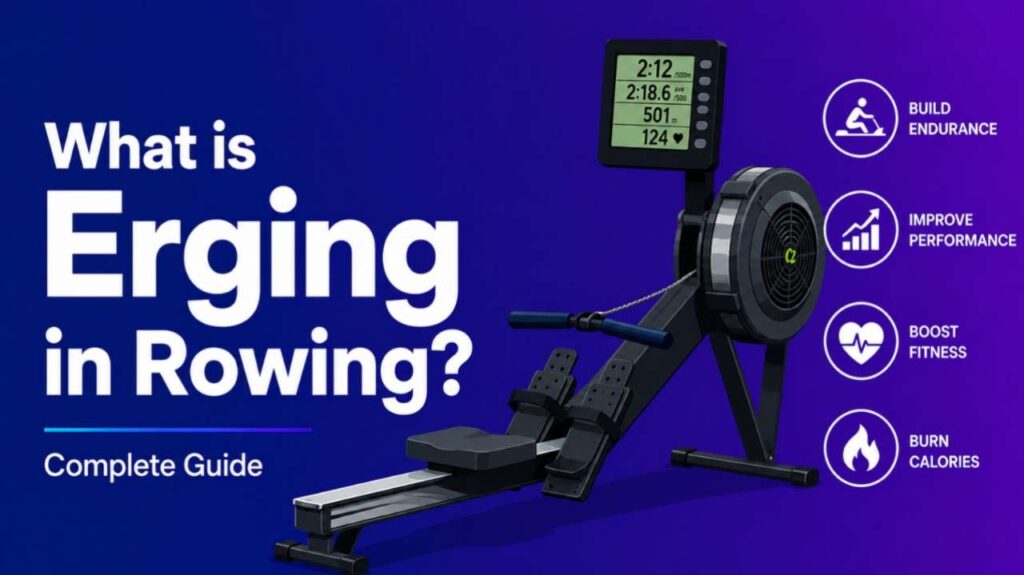
What is Erging in Rowing – Erging in rowing is the practice of training on an indoor rowing machine, often called an “erg” (short for ergometer). It simulates the motion of rowing on water, allowing athletes to build endurance, strength, and technique when they cannot row outdoors.
How Erging Works
- The Machine: An ergometer measures work output while simulating the rowing stroke.
- Resistance: Most ergs use air resistance (like the Concept2), though some use water or magnetic systems.
- Performance Tracking: Displays metrics such as split times, distance, watts, and calories.
- Training Role: Used for conditioning, testing, and technique practice.
Benefits of Erging
- Accessibility: Allows training indoors regardless of weather.
- Consistency: Provides measurable data for progress tracking.
- Fitness: Builds cardiovascular endurance and full-body strength.
- Technique: Helps rowers refine stroke mechanics.
Also Read-What is a Good Cardio Load
Common Uses of Erging
- Winter training when water is frozen.
- Fitness testing (e.g., 2k erg test for competitive rowers).
- Cross-training for athletes in other sports.
- Rehabilitation for injured rowers needing controlled exercise.
FAQs : What is Erging in Rowing
Why is it called an “erg”?
Erg” comes from “ergometer,” meaning a device that measures work.
Is erging the same as rowing?
It simulates rowing but lacks the balance, teamwork, and water conditions of actual rowing.
What is a 2k erg test?
A standard rowing fitness test where athletes row 2,000 meters as fast as possible.
Can non-rowers use an erg?
Yes, many gyms use rowing machines for general fitness because they provide a full-body workout.