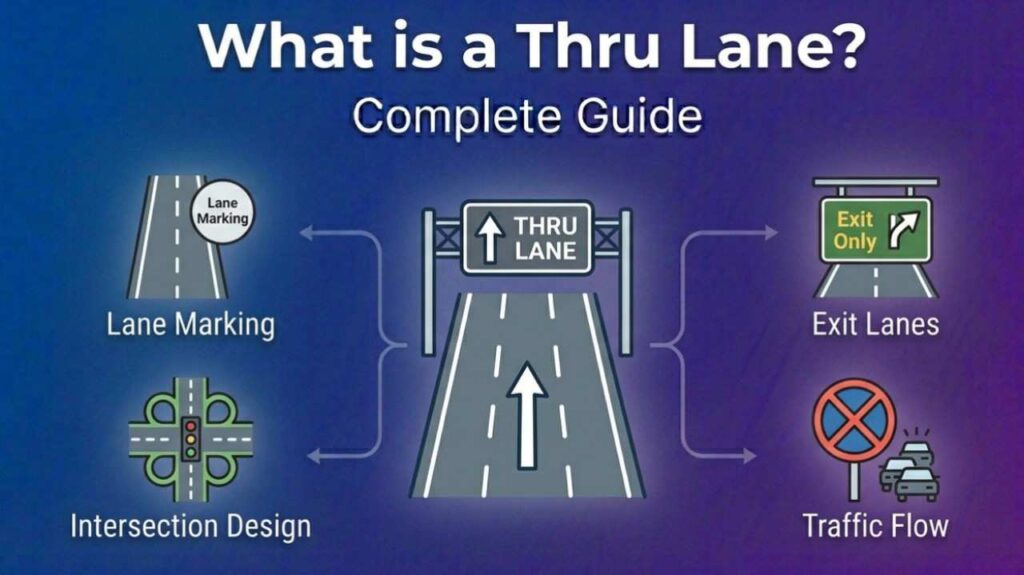
What is a Thru Lane – What is a thru lane refers to a traffic lane on a roadway that allows vehicles to continue straight through an intersection without turning. A thru lane is designed for uninterrupted forward movement, distinguishing it from turn lanes that require drivers to turn left or right.
How a Thru Lane Works
- Purpose: Keeps traffic flowing straight ahead at intersections.
- Markings: Often labeled with arrows pointing forward.
- Separation: Positioned next to turn lanes to reduce confusion.
- Usage: Drivers use thru lanes when they intend to continue straight without turning.
Benefits of Thru Lanes
- Traffic efficiency: Reduces congestion by separating straight‑through traffic from turning vehicles.
- Safety: Minimizes accidents caused by sudden lane changes.
- Clarity: Clear markings guide drivers on proper lane use.
Also Read-What Is A Task Manager
Examples
- On a multi‑lane road, the middle lanes are typically thru lanes, while the far left or right lanes may be designated for turns.
- At a busy intersection, signage may read “Left Turn Only” or “Right Turn Only,” while the thru lane is marked with a forward arrow.
Comparison: Thru Lane vs Turn Lane
| Thru Lane | Turn Lane |
|---|---|
| Vehicles go straight ahead | Vehicles must turn left or right |
| Marked with forward arrows | Marked with curved arrows |
| Reduces congestion for straight traffic | Improves flow for turning traffic |
| Example: Middle lane at intersection | Example: Far right lane for right turns |
FAQs : What is a Thru Lane
Can I turn from a thru lane?
No, thru lanes are for going straight. Turning from them may result in a traffic violation.
How do I know if I’m in a thru lane?
Look for pavement arrows or road signs showing a straight arrow.
Are thru lanes always in the middle?
Usually, but lane placement depends on road design and traffic flow.
Why are thru lanes important?
They streamline traffic movement and reduce delays at intersections.