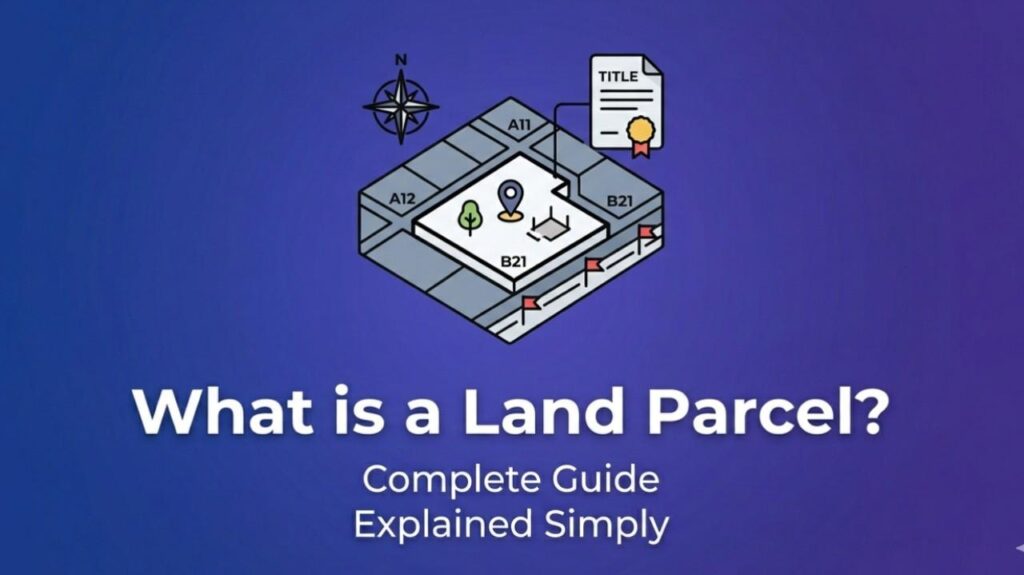
What Is a Land Parcel – A land parcel refers to a distinct, contiguous piece of land that has been officially separated and recorded with clear boundaries. It serves as the basic unit for real estate transactions, property taxes, zoning, and legal ownership.
Counties and local governments assign each parcel a unique identifier, often called an Assessor’s Parcel Number (APN). This number links the land to records about ownership, size, value, land use, and any restrictions like easements.
Key Characteristics of a Land Parcel
- Defined Boundaries: Established through surveys, deeds, or plats. These create a precise polygon on official maps.
- Legal Status: Recognized in public records, making it transferable, taxable, and developable according to local laws.
- Variable Size: Ranges from tiny urban lots (fractions of an acre) to large rural tracts spanning hundreds of acres.
- Associated Data: Includes ownership details, assessed value, zoning classification, and improvements (like buildings).
Land Parcel vs. Lot vs. Plot vs. Tract
People often use these terms interchangeably, but subtle differences exist:
- Parcel: The formal legal and tax term for a recorded unit of land.
- Lot: Typically refers to a subdivided piece intended for building, often in a residential development. Many sources treat “lot” and “parcel” as synonyms in everyday use.
- Plot: Similar to lot, often used more casually or in planning contexts.
- Tract: Usually describes a larger, less precisely subdivided area of land.
In practice, a single parcel might contain multiple lots, or a large parcel might function as one big lot.
Also Read-What is Felt Pen
Common Uses and Importance
Land parcels form the foundation of property systems. Buyers, sellers, developers, governments, and utilities rely on them for:
- Buying or selling real estate with clear title.
- Property tax assessment.
- Zoning and land-use planning.
- Infrastructure projects (roads, utilities).
- Environmental management and emergency planning.
Accurate parcel data helps prevent boundary disputes and supports informed decisions in real estate.
Examples of Land Parcels
- A 0.25-acre residential lot in a suburban neighborhood with a house.
- A 50-acre farmland parcel used for agriculture.
- A 5-acre vacant commercial parcel zoned for retail development.
- Public parcels like parks or government buildings.
FAQs : What Is a Land Parcel
What makes a piece of land a legal parcel?
It must have surveyed boundaries recorded in official documents, along with a unique parcel identifier for ownership and taxation.
Can one parcel be divided into multiple parcels?
Yes. This process, called subdivision, requires local government approval and updated surveys and records.
How do I find information about a specific land parcel?
Search your county assessor’s website using the address or APN. Many provide online parcel viewers with maps, ownership, and tax details.
Does a land parcel include buildings?
The parcel is the land itself. Any structures are improvements on the parcel, but the legal unit remains the land boundaries.
Are all land parcels buildable?
No. Zoning, environmental restrictions, access issues, or size can prevent development even if the land is a valid parcel.