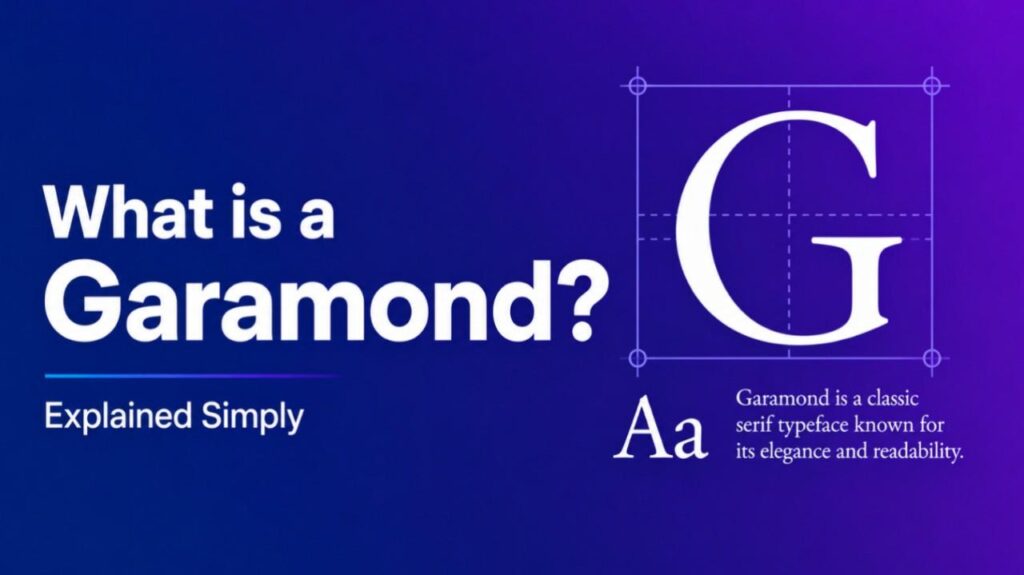
What is a Garamond – A Garamond is a classic serif typeface known for its elegant, readable design. It features high contrast between thick and thin strokes, slanted serifs, and open letterforms. Claude Garamond originally created it in the 16th century.
History of Garamond
Claude Garamond, a French type designer, developed the font around 1530. It drew inspiration from Roman inscriptions and Italian Renaissance type. Modern digital versions build on his work while adapting it for contemporary use.
Key Characteristics
- Serif Style — Bracketed serifs with elegant curves
- Proportions — Balanced x-height and open counters
- Readability — Excellent for long text passages
- Contrast — Noticeable difference between thick and thin strokes
Also Read-What is a Libra soulmate
Types of Garamond Fonts
Several interpretations exist today:
- Adobe Garamond — Popular digital version
- Garamond Premier — More faithful to historical models
- ITC Garamond — Modernized with higher x-height
- EB Garamond — Open-source revival
Benefits and Uses
- Ideal for books, newspapers, and long documents
- Conveys sophistication and tradition
- Highly legible at small sizes
- Versatile for both print and digital
Publishers, designers, and brands use Garamond for its timeless appeal.
Garamond vs. Times New Roman
Both are serif fonts, but Garamond feels more elegant and organic. Times New Roman has stronger, more mechanical serifs and a more compact design. Garamond often reads as more refined for body text.
FAQs : What is a Garamond
Is Garamond free?
Some versions like EB Garamond are open-source and free. Others require purchase or come with software.
What is Garamond best for?
Long-form reading material like books, magazines, and reports.
Can I use Garamond for web design?
Yes, though web-safe alternatives or web fonts ensure consistent display across devices.
How do you pronounce Garamond?
GAIR-ah-mond (French influence).
Who uses Garamond today?
Many major publishers, including Penguin and Oxford University Press.