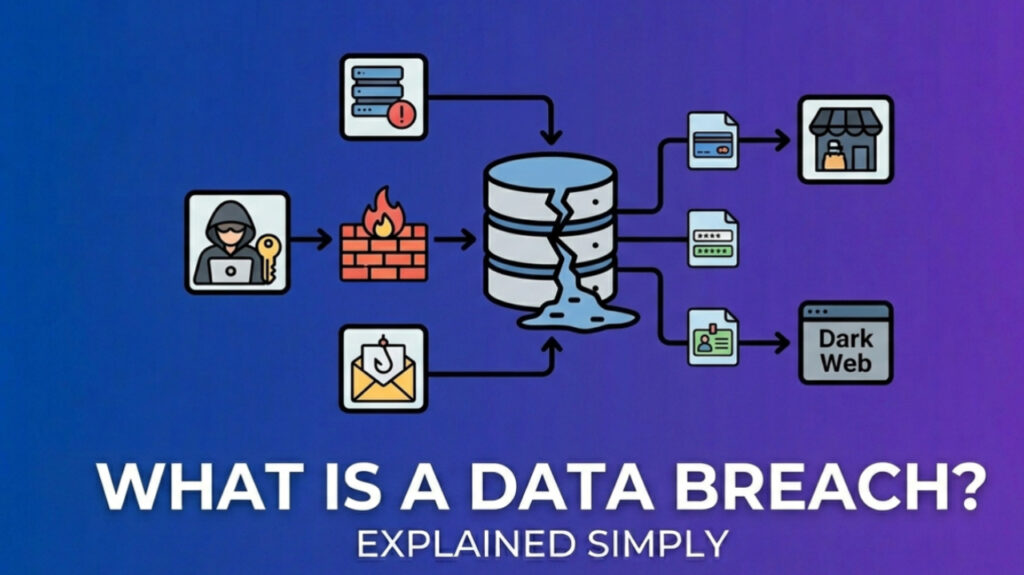
What Is A Data Breach ? – A data breach is a security incident where unauthorized individuals access, steal, view, or disclose sensitive or confidential information. This includes personal data like Social Security numbers, financial details, health records, or corporate intellectual property. Breaches can result from cyberattacks, human error, or system vulnerabilities.
What Is a Data Breach?
A data breach occurs when protected information ends up in the hands of people who should not have it. It compromises the confidentiality, integrity, or availability of the data. Organizations and individuals face serious risks from such incidents.
How a Data Breach Happens
Data breaches typically follow these patterns:
- Attackers gain initial access through phishing, malware, or stolen credentials.
- They move laterally inside the network to locate valuable data.
- They exfiltrate (steal) the data or encrypt it for ransom.
Common causes include weak passwords, unpatched software, misconfigured cloud storage, insider threats, and social engineering. Human error plays a role in many cases.
Common Types of Data Breaches
- External cyberattacks: Hacking, ransomware, or phishing by outsiders.
- Insider threats: Employees or contractors who misuse access intentionally or accidentally.
- Accidental breaches: Mis-sent emails, lost devices, or publicly exposed databases.
- Supply chain/third-party breaches: Attacks on vendors that affect the main organization.
Also Read-What Is A Browser Cache ?
Real-World Examples
Large-scale breaches have affected billions of records. Recent notable incidents include massive exposures at companies like National Public Data (affecting billions of records) and healthcare organizations losing millions of patient files. High-profile historical cases involve Equifax, Yahoo, and Marriott.
Impacts of a Data Breach
- Financial losses: Ransom payments, legal fees, fines, and lost business.
- Identity theft and fraud: Stolen personal data used for crimes.
- Reputational damage: Loss of customer trust.
- Regulatory penalties: Violations of laws like GDPR or HIPAA.
Average breach costs run into millions of dollars, with detection and containment taking many months.
Data Breach vs. Data Leak
A data breach usually involves unauthorized access, often through malicious action. A data leak is typically accidental exposure due to negligence, such as leaving a database publicly accessible. Both can have similar consequences, but breaches often imply active exploitation.
How to Prevent Data Breaches
- Use strong, unique passwords and enable multi-factor authentication (MFA).
- Keep software and systems updated.
- Train employees on phishing and security best practices.
- Encrypt sensitive data and limit access.
- Monitor networks and use security tools like firewalls and intrusion detection.
- Develop and test an incident response plan.
FAQs : What Is A Data Breach ?
What should I do if I’m affected by a data breach?
Change passwords immediately, monitor accounts for fraud, enable fraud alerts with credit bureaus, and follow instructions from the breached organization.
How do companies notify victims?
They usually send emails or letters and may offer free credit monitoring. Notification requirements vary by state and country.
Can a data breach be prevented completely?
No organization is 100% immune, but strong security practices significantly reduce the risk.
Are small businesses at risk?
Yes. Attackers often target smaller companies with weaker defenses as easier entry points.
How long do companies have to report a data breach?
It depends on the location and data type. Many laws require notification within 30–72 days.