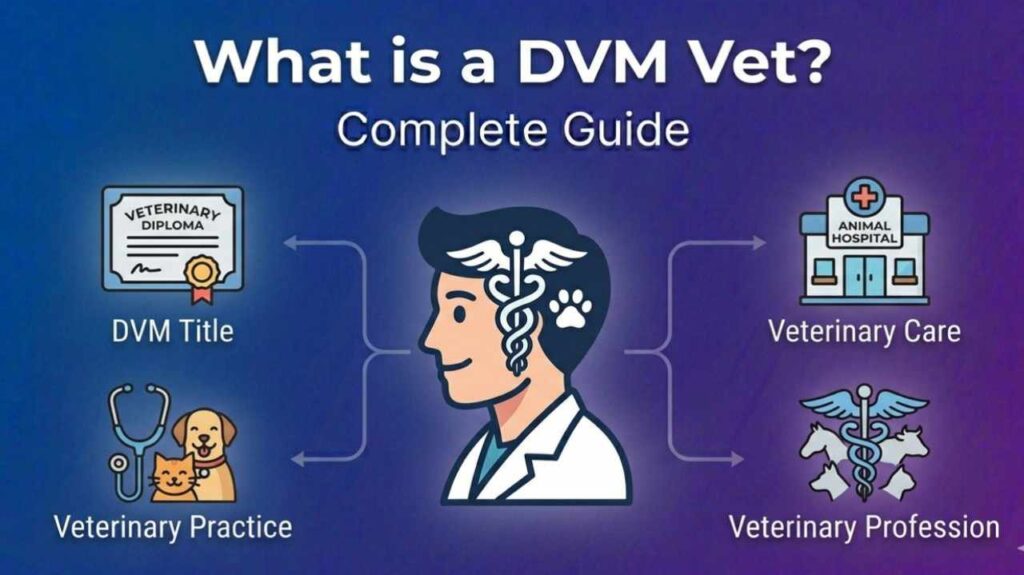
What is a DVM vet refers to a licensed veterinarian who holds the professional degree of Doctor of Veterinary Medicine (DVM). A DVM vet is trained to diagnose, treat, and prevent diseases in animals, perform surgeries, prescribe medications, and provide overall healthcare for pets, livestock, and wildlife.
How a DVM Vet Works
- Education: Completes a veterinary medicine program (usually 4 years after undergraduate studies).
- Licensing: Must pass national and state exams to practice legally.
- Scope of practice: Covers animal health, surgery, dentistry, nutrition, and preventive care.
- Settings: Works in clinics, hospitals, farms, research labs, or government agencies.
Types of DVM Vets
- Companion animal vets: Treat pets like dogs, cats, and rabbits.
- Large animal vets: Care for livestock such as cattle, horses, and sheep.
- Exotic animal vets: Specialize in reptiles, birds, and zoo animals.
- Specialist vets: Focus on areas like cardiology, oncology, or dermatology.
Benefits of a DVM Vet
- Comprehensive care: Trained to handle diverse medical issues in animals.
- Preventive medicine: Vaccinations, parasite control, and wellness exams.
- Emergency response: Skilled in trauma and urgent surgeries.
- Public health role: Helps prevent zoonotic diseases (those that spread from animals to humans).
Also Read-What Is An Email Alias
Examples of What a DVM Vet Does
- Treats a dog with an ear infection.
- Performs surgery on a horse with a broken leg.
- Advises farmers on herd health and nutrition.
- Conducts lab research on animal diseases.
FAQs : What is a DVM Vet
What does DVM stand for?
Doctor of Veterinary Medicine.
Is a DVM vet the same as a veterinarian?
Yes, “DVM” is the degree title; “veterinarian” is the profession.
Can a DVM vet treat all animals?
They are trained broadly, but many specialize in specific species or fields.
How long does it take to become a DVM vet?
Typically 7–8 years (undergraduate + veterinary school).