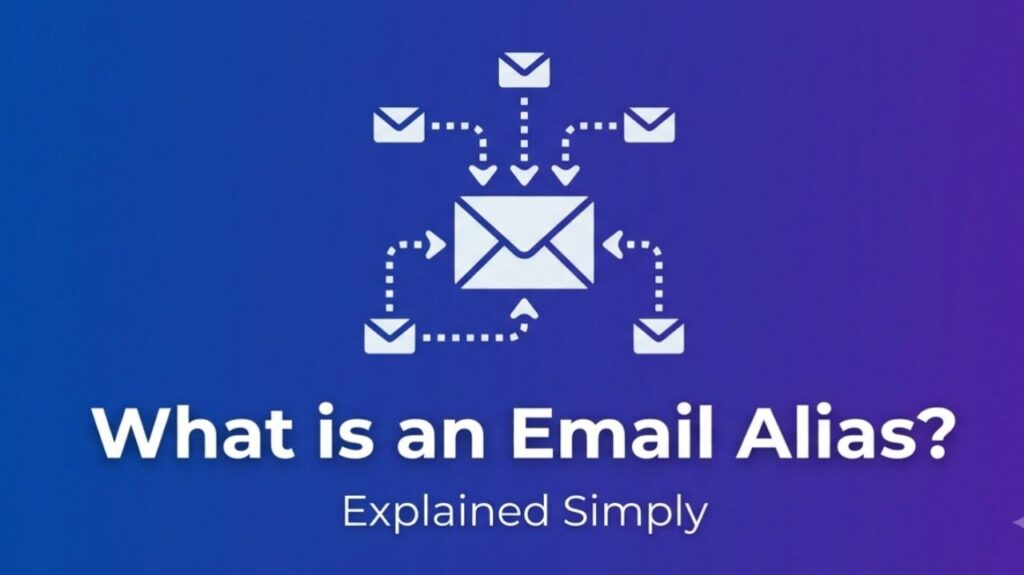
What Is An Email Alias ? – An email alias is an additional email address that forwards messages to your primary inbox. It lets you receive (and often send) emails without sharing or using your main email address.
How an Email Alias Works
When someone sends an email to your alias:
- The message routes automatically to your primary email account’s inbox.
- You can reply from the alias, so recipients see the alias address instead of your primary one.
- Most services allow you to create, manage, and delete aliases easily through your email provider’s settings.
Aliases use the same inbox, contacts, and account settings as your main address. They do not require a separate login or mailbox.
Types of Email Aliases
- Provider-built aliases — Offered by services like Outlook.com, Google Workspace, Apple iCloud, or Proton Mail.
- Catch-all aliases — Accept any email sent to your domain (e.g., anything@yourdomain.com).
- Anonymous / Privacy aliases — Generated by services like SimpleLogin, Proton Pass, or Apple Hide My Email for one-time or temporary use.
- Role-based aliases — Such as sales@company.com or support@company.com that forward to the right person.
Benefits and Uses
- Protect privacy — Avoid sharing your real email with websites, newsletters, or strangers.
- Reduce spam — If an alias starts receiving junk, delete or disable it without affecting your main address.
- Organize email — Create aliases for shopping, work, personal, or specific projects and filter them automatically.
- Professional appearance — Use role-based aliases to make a small team or business look larger.
- Security — Limit exposure if an alias is compromised.
Also Read-What Is A Cold Wallet ?
Real-World Examples
- Sign up for online shopping with shop@yourname.com.
- Use support@company.com that forwards to the current support team member.
- Generate a unique alias for each website via a privacy service.
- Create newsletter@yourname.com to separate subscriptions from important mail.
Email Alias vs Email Forwarding
An email alias is usually tied to your account and often supports sending from the alias. Email forwarding redirects mail from one address to another, typically without easy reply-from options or full integration.
Aliases feel more seamless for ongoing use, while forwarding is simpler for temporary redirection.
FAQs : What Is An Email Alias ?
Can I send emails from an alias?
Yes, with most modern services. Recipients see the alias as the sender.
Are email aliases free?
Many providers include them at no extra cost. Privacy-focused services may offer paid plans for unlimited aliases.
How many aliases can I create?
Limits vary — Outlook and Google Workspace allow several, while dedicated alias services offer unlimited options.
Do aliases help with privacy?
Yes. They keep your primary email hidden and make it easy to cut off spam or data leaks.
Can I use an alias with any email provider?
It depends on the provider. Some support aliases natively; others work best with third-party services.