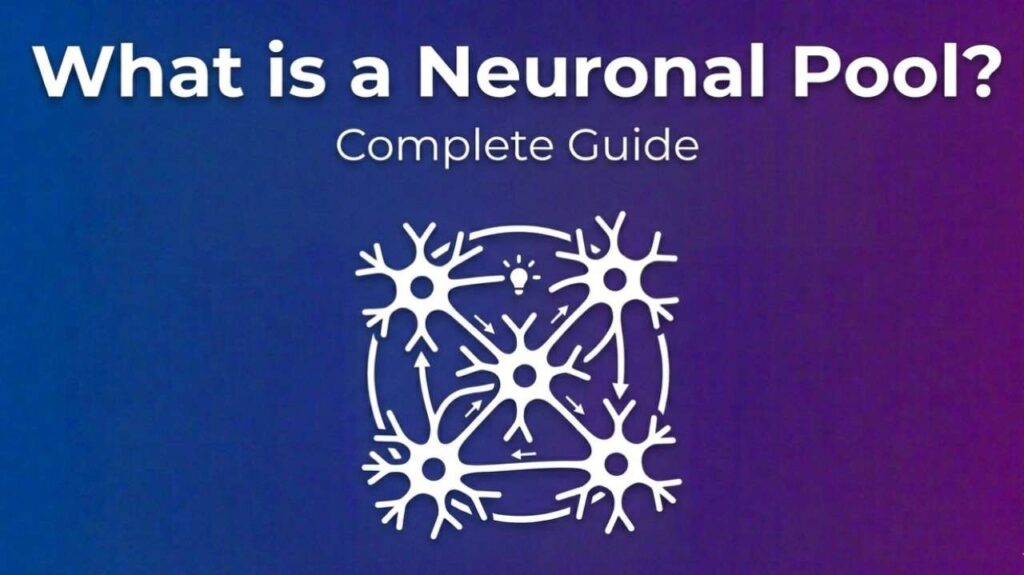
What is a Neuronal Pool – A neuronal pool is a group of interconnected neurons that work together to process information. Instead of acting alone, neurons form pools that receive multiple inputs, integrate them, and send unified signals to other parts of the nervous system.
How Neuronal Pools Work
- Input Zone: Neurons receive excitatory or inhibitory signals from sensory or other neurons.
- Output Zone: Processed signals are transmitted to muscles, glands, or other brain regions.
- Integration: Pools combine signals, filter noise, and determine whether an action potential is generated.
- Circuit Types: Diverging (one input spreads to many outputs), converging (many inputs funnel into one output), and reverberating circuits (feedback loops for sustained activity).
Types of Neuronal Pools
| Type | Function | Example |
|---|---|---|
| Diverging | Amplifies one signal to many neurons | Motor commands spreading to multiple muscles |
| Converging | Combines inputs into one output | Visual and auditory signals integrating for response |
| Reverberating | Maintains continuous activity | Breathing rhythm control |
| Parallel Processing | Handles multiple tasks simultaneously | Reflexes plus conscious awareness of stimuli |
Benefits / Uses
- Efficient Processing: Pools allow the CNS to handle vast amounts of sensory data quickly.
- Coordination: Synchronizes muscle contractions and reflexes.
- Adaptability: Facilitated and inhibited zones fine-tune responses.
- Clinical Insight: Dysfunction in pools can lead to epilepsy, neurodegeneration, or impaired reflexes.
Also Read-What Is A P2p Network
Examples
- Spinal Cord Reflexes: Pools in the dorsal gray matter coordinate withdrawal reflexes.
- Cerebral Cortex: Large neuronal pools process sensory input for decision-making.
- Respiratory Centers: Pools in the medulla generate rhythmic breathing patterns.
FAQs : What is a Neuronal Pool
Can a single neuron belong to multiple pools?
Yes, neurons often participate in more than one pool depending on their connections
What is the difference between a discharge zone and a facilitated zone?
Discharge zones trigger action potentials directly, while facilitated zones require additional input to fire.
Why are neuronal pools important?
They are the building blocks of neural circuits, enabling reflexes, motor control, and cognition.
Are neuronal pools only in the brain?
No, they exist throughout the CNS, including the spinal cord and brainstem.