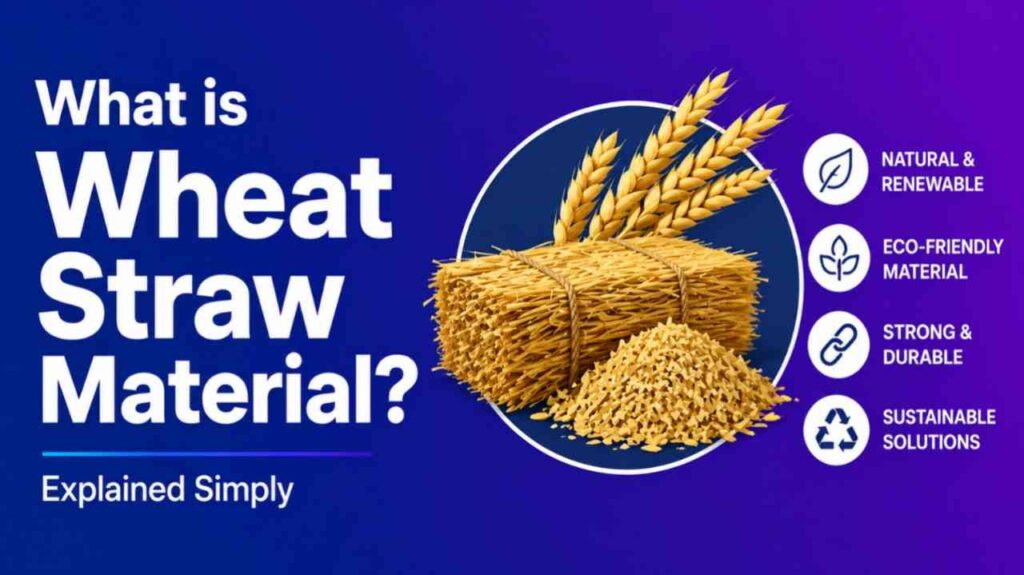
What is Wheat Straw Material – Wheat straw material is a sustainable bioplastic made from the leftover stalks of wheat plants after the grain is harvested. These fibers are combined with polymers to create durable, lightweight, and eco-friendly products such as plates, cups, packaging, and household items.
How Wheat Straw Material Works
- Source: After wheat is harvested, the stalks (straw) remain as agricultural waste.
- Processing: The straw is broken down into fibers and combined with polymers or resins.
- Result: A strong, lightweight material that mimics plastic but is more sustainable.
Types of Wheat Straw Material
| Type | Composition | Common Uses |
|---|---|---|
| Pure Wheat Straw Fiber | 100% plant fiber | Compostable packaging, paper products |
| Wheat Straw Bioplastic | Wheat fiber + polymer blend | Plates, cups, cutlery, containers |
| Composite Wheat Straw | Wheat fiber + other natural fillers | Durable household goods, reusable items |
Benefits of Wheat Straw Material
- Eco-friendly: Reduces plastic waste and uses agricultural byproducts.
- Biodegradable: Many wheat straw products break down naturally.
- Durable: Strong enough for daily use, heat-resistant, and lightweight.
- Cost-effective: Utilizes waste material, lowering production costs.
Also Read-What is a flash sale
Examples of Use
- Tableware: Plates, bowls, cups, and cutlery.
- Packaging: Food containers and eco-friendly wraps.
- Household items: Storage boxes, reusable straws, and organizers.
FAQs : What is Wheat Straw Material
Is wheat straw material safe for food use?
Yes, it is FDA-approved for food contact and often used in tableware.
Can wheat straw products go in the microwave?
Most wheat straw bioplastics are microwave-safe up to certain temperatures.
Is wheat straw material fully biodegradable?
Pure fiber products are compostable, while bioplastic blends may take longer to break down.
How does it compare to bamboo or corn-based materials?
Wheat straw is similar in sustainability but often cheaper since it uses agricultural waste.