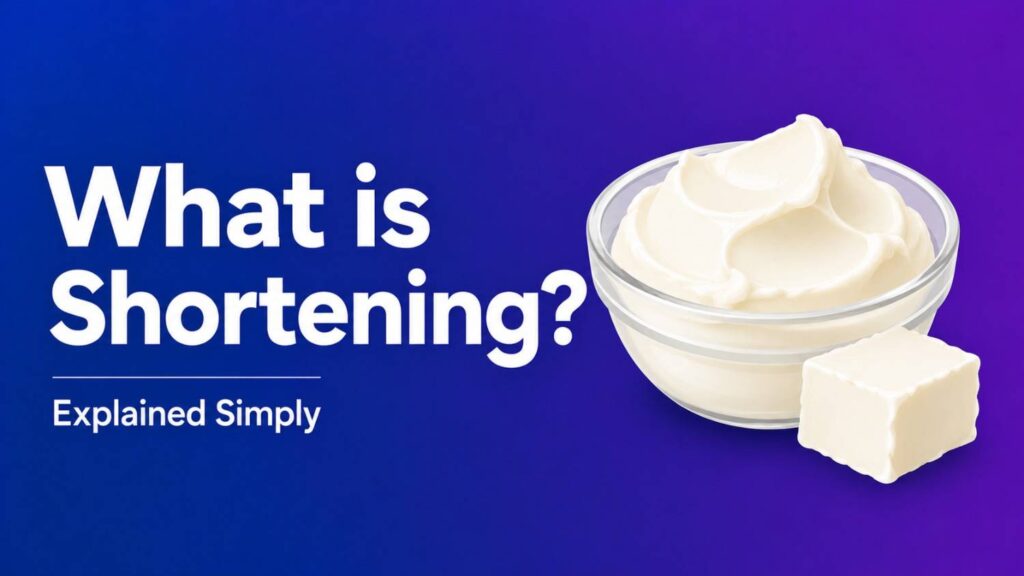
What is Shortening – Shortening is a solid fat used in baking to create tender, flaky textures. It is usually made from vegetable oils that are hydrogenated to make them solid at room temperature.
How Shortening Works
Shortening coats flour proteins and prevents gluten development. This results in tender baked goods. It also traps air and creates layers in pastries for flakiness.
Types of Shortening
- Regular shortening: All-purpose for cookies, cakes, and pie crusts.
- Butter-flavored shortening: Adds buttery taste.
- High-ratio shortening: Used in commercial bakeries for icings.
- Organic or non-hydrogenated: Healthier alternatives made from palm or coconut oil.
Also read-What is the Latitude and Longitude of Los Angeles
Common Uses
- Pie crusts and biscuits
- Cookies and cakes
- Frying (high smoke point)
- Icings and frostings
Shortening vs Butter vs Lard
- Shortening: Neutral flavor, high smoke point, 100% fat.
- Butter: Rich flavor, lower smoke point, contains water and milk solids.
- Lard: Good flakiness, distinct pork flavor.
FAQs : What is Shortening
Is shortening the same as vegetable oil?
No. Shortening is solid; vegetable oil is liquid.
Does shortening contain trans fats?
Many older formulas did. Most modern versions are trans-fat free.
Can you substitute shortening for butter?
Yes. Use a 1:1 ratio, but expect less flavor and different texture.
Is shortening vegan?
Most vegetable-based shortening is vegan. Check labels for animal fats.