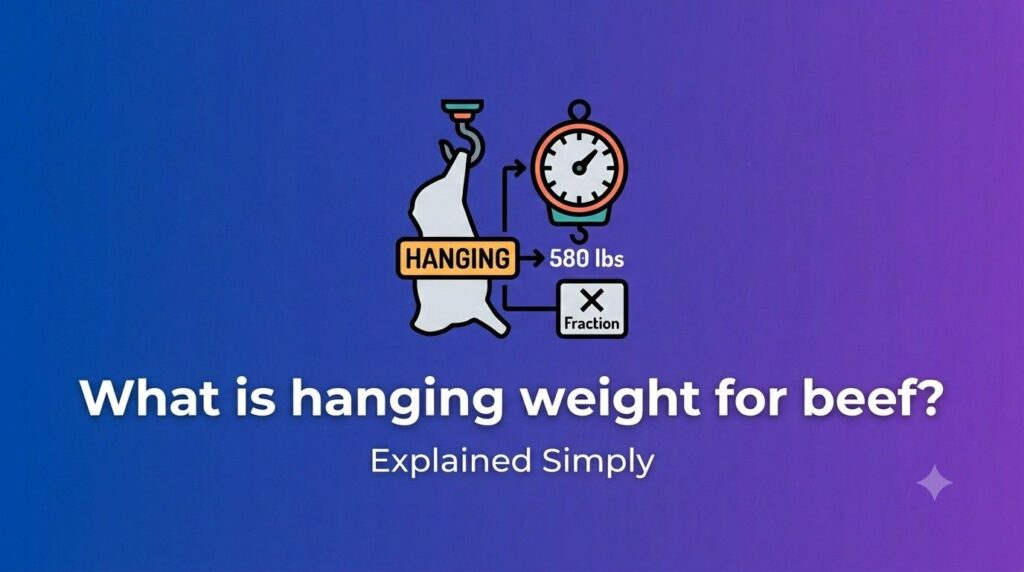
What Is Hanging Weight For Beef ? – Hanging weight for beef is the weight of the animal’s carcass after slaughter, once the head, hide, hooves, blood, and internal organs have been removed, but before further aging, trimming, cutting, and packaging.
It is also called “hot carcass weight” or “on-the-rail weight” and serves as the standard measure many farmers and processors use to price bulk beef purchases like quarters, halves, or whole animals.
Why Hanging Weight Matters
When buying beef directly from a farm, prices are often quoted per pound of hanging weight. This number is higher than the final packaged meat you take home, which can surprise first-time buyers. Understanding it helps you calculate actual costs and expected yield.
The Weight Journey of a Beef Animal
Three main weights are used in beef processing:
- Live weight: The animal’s full weight while alive (“on the hoof”).
- Hanging weight: Roughly 60-65% of live weight for most beef cattle. This is what remains after initial slaughter and dressing.
- Packaged (take-home) weight: Typically 60-70% of hanging weight, or about 40-50% of live weight. This is the final boneless or bone-in cuts you receive after trimming, deboning, aging, and packaging.
Example: A 1,000 lb live steer might yield a 600 lb hanging weight carcass. From that, you could expect around 360-420 lbs of packaged meat, depending on cuts chosen, fat trim, and bone preferences.
Also Read-what is pdf spark
Hanging Weight vs. Other Common Terms
- Carcass weight is essentially the same as hanging weight.
- Dressing percentage = (Hanging weight ÷ Live weight) × 100. Good grass-fed or finished steers often dress out at 58-64%.
- Some sellers quote “packaged weight” pricing instead, which is closer to what you actually receive but usually costs more per pound.
Always clarify with the seller whether the price includes processing (butchering, cutting, wrapping, freezing) or if you pay the processor separately.
Benefits of Buying by Hanging Weight
- Transparent for farmers and processors.
- Allows buyers to get custom cuts.
- Often more economical than grocery store prices for high-quality, local beef.
FAQs : What Is Hanging Weight For Beef ?
How much less meat do I get compared to hanging weight?
Expect 30-40% shrinkage from hanging weight to packaged weight due to bone removal, fat trimming, and moisture loss during aging.
Is hanging weight the best way to compare prices?
It’s common, but calculate your estimated take-home cost per pound for a true apples-to-apples comparison with grocery or packaged-weight pricing.
Does breed, feed, or age affect hanging weight?
Yes. Grass-fed animals may have slightly lower dressing percentages than grain-finished ones. Fatter animals can yield more, while very lean ones yield less usable meat.
Should I avoid buying beef priced by hanging weight?
it’s standard industry practice. Just understand the yield differences and ask for the processor’s expected take-home percentages.