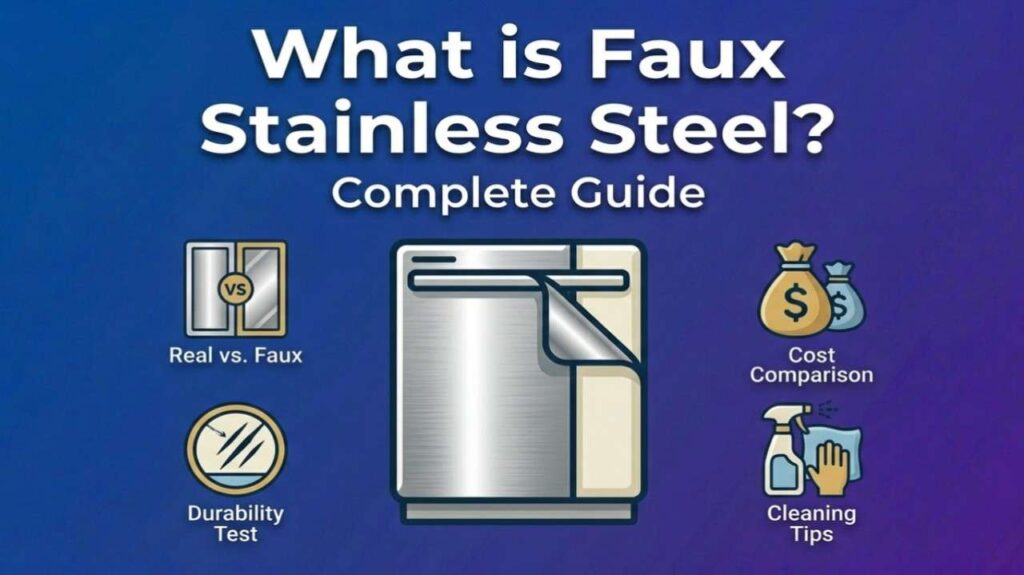
What is faux stainless steel refers to a material or finish designed to mimic the look of real stainless steel without being made from the actual alloy. Faux stainless steel uses coatings, films, or metallic finishes applied to cheaper substrates like aluminum, galvanized steel, or even plastic, giving the appearance of stainless steel at a lower cost and weight.
How Faux Stainless Steel Works
- Base material (substrate): Often aluminum, carbon steel, or plastic.
- Coating/finish: Metallic-looking layer applied via powder coating, vinyl films, or electroplating.
- Appearance: Replicates the brushed or polished look of stainless steel.
- Difference from real stainless steel: Genuine stainless is an alloy with chromium integrated throughout, while faux stainless relies on surface treatment.
Types of Faux Stainless Steel
- Vinyl or PVC films: Thin polymer sheets with metallic patterns, common on refrigerators and dishwashers.
- Powder-coated finishes: Metallic pigments applied to metal surfaces and cured with heat.
- Electroplated coatings: Chromium or metallic layers added to enhance shine and resist tarnish.
- Painted finishes: Specialty paints with metallic particles for decorative use.
Benefits of Faux Stainless Steel
- Cost-effective: Cheaper than solid stainless steel.
- Lightweight: Easier to transport and install.
- Versatile: Can be applied to various substrates.
- Fingerprint-resistant: Many faux finishes resist smudges better than real stainless.
- Design flexibility: Used in appliances, countertops, backsplashes, and wall cladding.
Also Read-What is Monetoad
Examples of Use
- Kitchen appliances marketed as “stainless steel look.”
- Decorative panels in modern architecture.
- Countertops and backsplashes in residential and commercial spaces.
- Bathroom vanities and furniture with metallic finishes.
Comparison: Faux Stainless Steel vs Real Stainless Steel
| Faux Stainless Steel | Real Stainless Steel |
|---|---|
| Surface coating over cheaper material | Solid alloy with chromium integrated |
| Lower cost, lighter weight | Higher cost, heavier, more durable |
| Fingerprint-resistant finishes available | Prone to smudges unless treated |
| Used for appearance, not strength | Used for strength, corrosion resistance |
| Common in appliances and décor | Common in industrial, medical, and kitchen equipment |
FAQs : What is Faux Stainless Steel
Is faux stainless steel durable?
It is durable for decorative use but not as strong or corrosion-resistant as real stainless steel.
Can faux stainless steel rust?
Yes, if the coating is damaged, the underlying material may corrode.
How do I clean faux stainless steel?
Use mild soap and water; avoid abrasive cleaners that can scratch the finish.
Is faux stainless steel good for outdoor use?
High-quality coatings can resist weather, but it’s less reliable than true stainless steel outdoors.