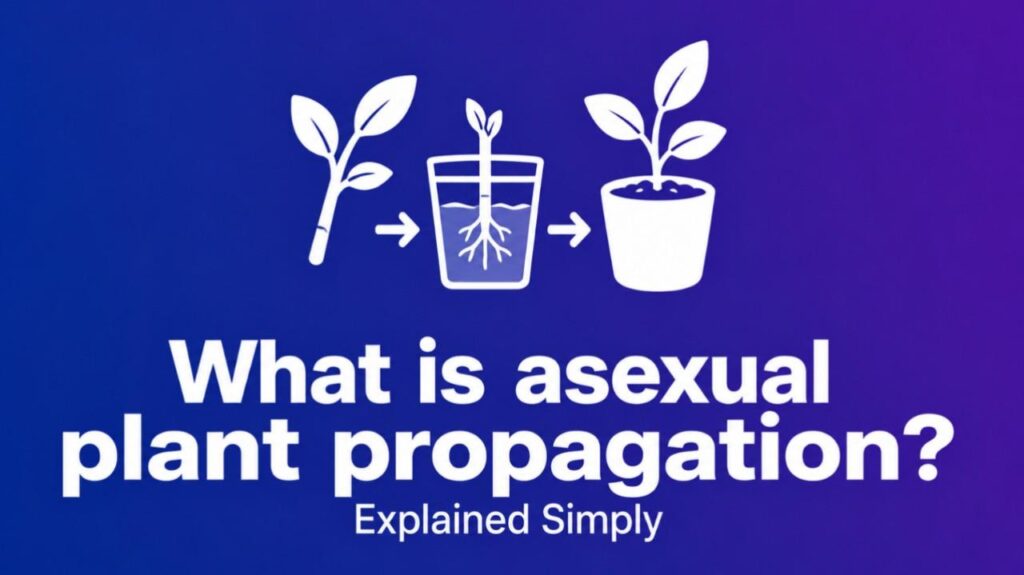
What is asexual plant propagation – Asexual plant propagation is a method of creating new plants from vegetative parts of a single parent plant—such as stems, leaves, or roots—without seeds or sexual reproduction. The resulting plants are genetically identical clones of the parent.
How It Works
Asexual propagation relies on the plant’s ability to regenerate from vegetative tissues. Gardeners or growers remove a portion of the parent plant and encourage it to develop roots and shoots, forming a complete new plant. This process bypasses flowers, pollen, and seeds.
Main Types of Asexual Plant Propagation
Several practical methods exist:
- Cuttings: The most common method. Take stem, leaf, or root cuttings and place them in water, soil, or a growing medium to root.
- Layering: Bend a low branch to the ground (or use air layering on higher branches) so it roots while still attached to the parent.
- Division: Split a mature plant with multiple stems or bulbs into smaller sections, each with roots.
- Grafting and Budding: Join a stem or bud (scion) from one plant onto the rootstock of another for stronger growth or specific traits.
- Tissue Culture (Micropropagation): Grow new plants from tiny tissue samples in a sterile lab environment—used for mass production.
Benefits and Uses
Asexual propagation offers clear advantages:
- Produces plants that are true-to-type (identical to the parent).
- Faster maturity and earlier flowering or fruiting.
- Works for plants that rarely produce seeds or have sterile seeds (e.g., bananas, seedless grapes).
- Preserves desirable traits like disease resistance, flavor, or flower color.
- Often easier and more reliable than growing from seed for many species.
It is widely used in home gardening, commercial nurseries, and agriculture to maintain consistent quality.
Also Read-What is Site Access
Examples
- Stem cuttings: Propagating pothos, rosemary, or hibiscus.
- Division: Splitting hostas or daylilies.
- Grafting: Creating many varieties of apple or citrus trees on hardy rootstock.
- Layering: Propagating jasmine or climbing roses.
Asexual vs. Sexual Plant Propagation
People often compare the two:
- Asexual: One parent, genetically identical offspring, faster for clones, less genetic diversity.
- Sexual: Involves seeds from two parents, creates genetic variation, slower start but potentially stronger adaptability.
Choose asexual when you want exact copies of a favorite plant. Use sexual when breeding new varieties or seeking resilience.
FAQs : What is asexual plant propagation
Is asexual plant propagation the same as vegetative propagation?
Yes. Both terms refer to growing new plants from stems, leaves, or roots rather than seeds.
What are the disadvantages of asexual propagation?
Offspring have low genetic diversity, making them more vulnerable to the same diseases or pests as the parent. It can also spread viruses if the parent is infected.
Which plants are best for asexual propagation?
Many houseplants, fruit trees, shrubs, and perennials. Examples include potatoes (tubers), strawberries (runners), and mint (cuttings).
Can beginners succeed with asexual propagation?
Yes. Start with easy stem cuttings in water, like pothos or philodendron, and gradually try more advanced methods.