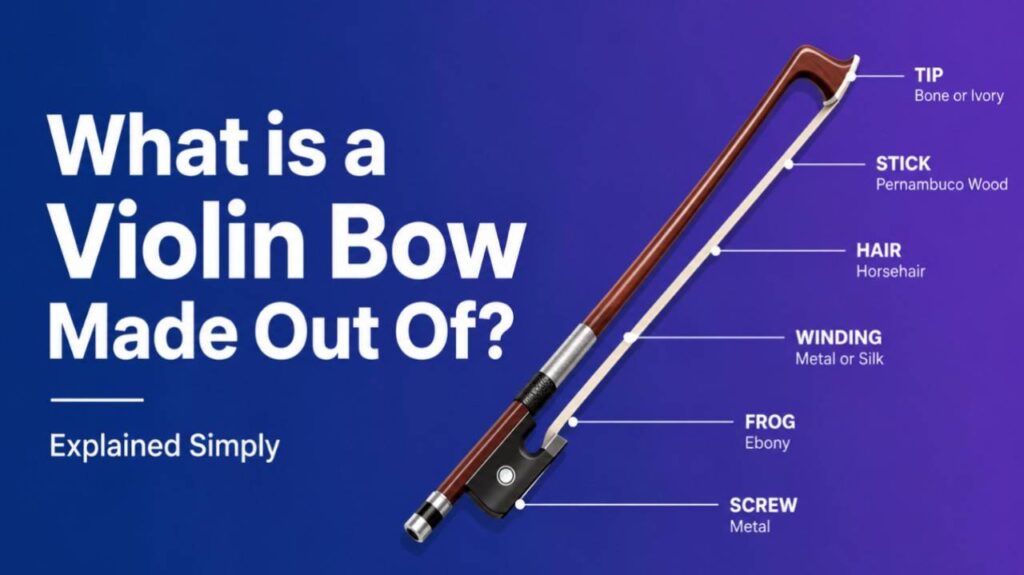
What is a Violin Bow Made Out Of – A violin bow consists of a wooden or carbon fiber stick, horsehair (or synthetic hair), a frog (the handle), and other fittings. Traditional bows use premium natural materials, while modern ones often incorporate synthetics for durability.
Main Parts and Materials
- The Stick: The long, flexible part.
- Traditional: Pernambuco wood (best quality, dense and resonant).
- Budget/Student: Brazilwood or other hardwoods.
- Modern: Carbon fiber (light, strong, and stable in all climates).
- The Hair: The part that touches the strings.
- Traditional: Horsehair (usually from the tail of horses in cold climates like Mongolia or Siberia for strength and texture). A violin bow uses 150–200 individual hairs.
- Synthetic: Nylon or other fibers for vegan or allergy-friendly options.
- The Frog: Holds and adjusts the hair tension. Made from ebony (high-end), rosewood, or plastic on student bows.
- Other Fittings: Include the tip (often ivory substitute or metal), winding (silver or silk thread), and grip (leather or rubber).
Traditional vs Modern Bows
Traditional wooden bows (especially Pernambuco) offer superior tone and response for advanced players. Carbon fiber bows provide consistency, lighter weight, and resistance to warping or breaking. They suit travel, students, and outdoor use.
Also Read-What is a Raised Foundation
Why Materials Matter
The stick provides flexibility and balance. The hair creates friction with the strings (helped by rosin) to produce sound. Quality materials directly affect tone, playability, and bow control.
FAQs : What is a Violin Bow Made Out Of
Is violin bow hair real horsehair?
Yes, most traditional bows use real horsehair. Synthetic alternatives exist.
What is the best wood for a violin bow?
Pernambuco is considered the gold standard for professional bows.
Are expensive bows always better?
Not always. A well-made carbon fiber bow can outperform a cheap wooden one.
How often do you replace violin bow hair?
Every 6–12 months for regular players, depending on usage.