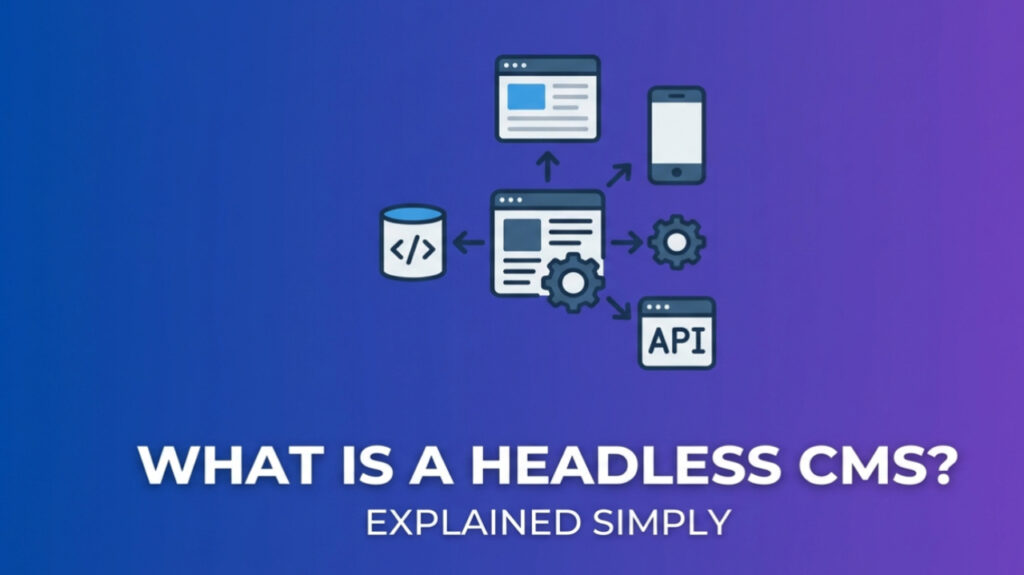
What Is A Headless Cms ? – A headless CMS is a content management system that separates the backend (where content is created and stored) from the frontend (where content is displayed). Instead of controlling how content looks, it delivers content via APIs, allowing developers to design and display it on any platform or device.
What is a Headless CMS?
A headless CMS is a modern content management system that focuses on storing and delivering content without dictating how it should be presented. Unlike traditional CMS platforms, it provides content through APIs, giving developers full flexibility to design websites, apps, or digital experiences.
How a Headless CMS Works
- Content Creation: Editors add and manage content in the backend.
- Storage: Content is stored in a central repository.
- Delivery: APIs (REST or GraphQL) deliver content to any frontend.
- Presentation: Developers use frameworks or tools to design how content appears on websites, apps, or IoT devices.
Benefits / Uses
- Omnichannel Delivery: Publish content across websites, mobile apps, smart devices, and more.
- Flexibility: Developers choose any frontend technology.
- Scalability: Easily handle large amounts of content and traffic.
- Faster Development: Content and design teams work independently.
- Future-Proof: Content remains usable even as frontend technologies evolve.
Also Read-what is a notarized letter
Examples of Headless CMS Platforms
- Contentful
- Strapi
- Sanity
- Ghost
Headless CMS vs. Traditional CMS
| Aspect | Headless CMS | Traditional CMS |
|---|---|---|
| Architecture | Backend only, no frontend | Backend + frontend tightly coupled |
| Delivery | APIs (REST/GraphQL) | Templates and themes |
| Flexibility | Any device or platform | Mostly websites |
| Examples | Contentful, Strapi | WordPress, Drupal |
FAQs : What Is A Headless Cms ?
Why is it called “headless”
The “head” refers to the frontend. A headless CMS removes it, focusing only on backend content management.
Who should use a headless CMS?
Businesses needing content across multiple platforms—websites, apps, smart devices—benefit most
Is WordPress a headless CMS?
WordPress can be used as a headless CMS when paired with APIs instead of its built-in themes.
Does a headless CMS require developers?
Yes. Unlike traditional CMS platforms, it relies on developers to build the frontend.