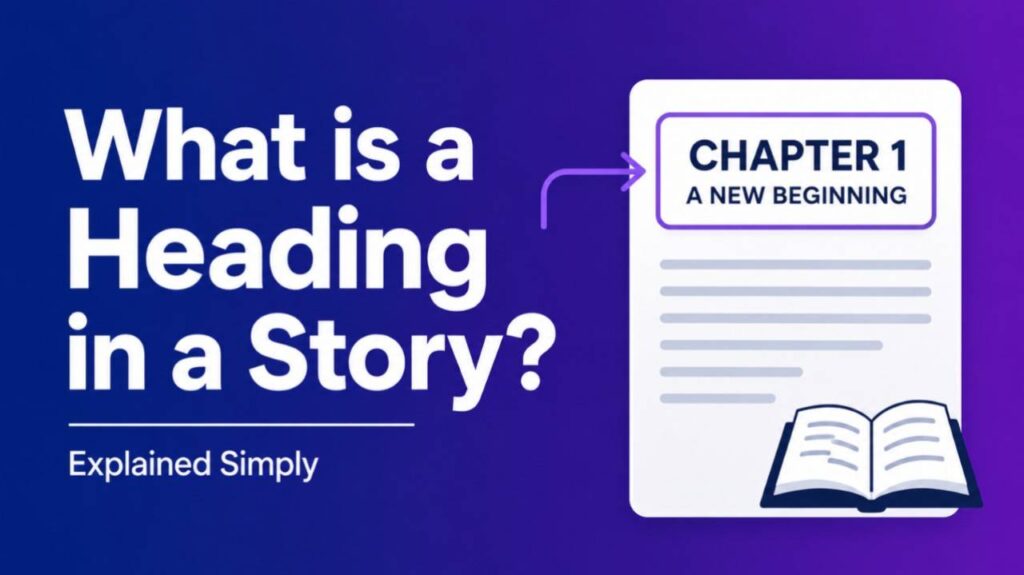
What is a Heading in a Story – How Headings Work
- Structure: Headings break a story into clear sections.
- Guidance: They tell readers what to expect in the next part.
- Emphasis: Highlight key themes or turning points.
Types of Headings
- Chapter headings: Used in novels or long stories to mark major divisions.
- Section headings: Found in essays, articles, or short stories to organize ideas.
- Subheadings: Smaller titles under main headings to add detail.
Benefits of Headings in a Story
- Clarity: Makes the text easier to follow.
- Navigation: Helps readers skim and find specific parts.
- Engagement: Captures attention with descriptive or creative titles.
Example
In a children’s storybook, a heading like “The Lost Puppy” signals the main event of that section. In a novel, chapter headings such as “The Journey Begins” set the tone for what follows.
Also Read-What is a Field Hockey Ball Made Of
Heading vs Title
| Heading | Title |
|---|---|
| Organizes sections within the story | Names the entire story |
| Multiple per story | Only one main title |
| Guides readers through content | Represents the overall theme |
FAQs : What is a Heading in a Story
Do all stories need headings?
No. Short stories often skip headings, while longer works use them for structure.
Can headings be creative?
Yes. Writers often use imaginative headings to spark curiosity.
Are headings the same as chapter titles?
Chapter titles are a type of heading, but headings can also appear in shorter sections.
Why are headings important in articles?
They improve readability and help readers quickly grasp the main points.