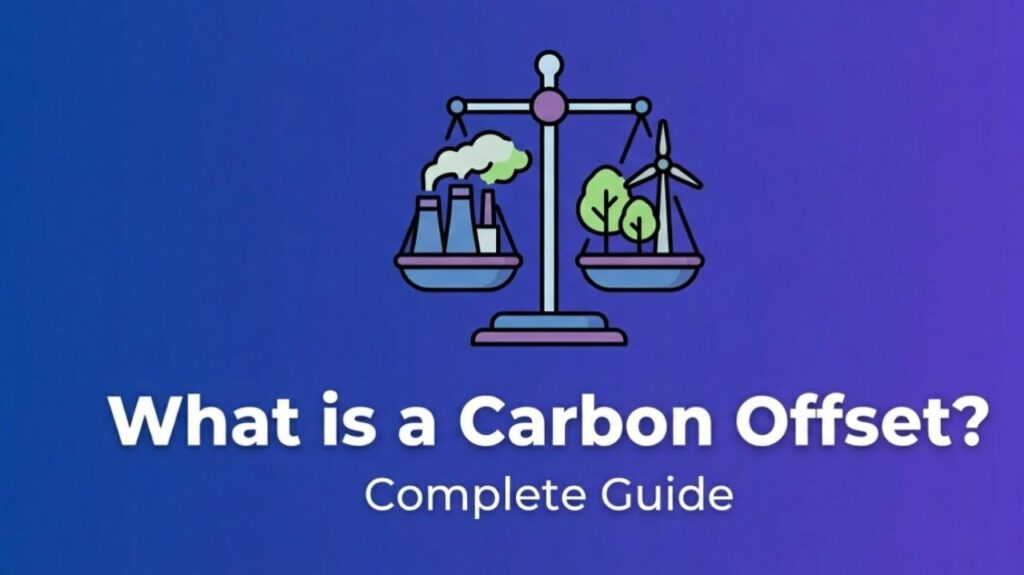
What Is A Carbon Offset ? – A carbon offset is a certificate representing the reduction or removal of one metric ton of carbon dioxide (CO₂) or its equivalent in greenhouse gases from the atmosphere. Individuals and companies buy these offsets to compensate for emissions they cannot fully eliminate.
How Carbon Offsets Work
The process follows these steps:
- Calculate emissions — Measure your carbon footprint from activities like travel, energy use, or manufacturing.
- Purchase offsets — Buy verified carbon credits from certified projects through registries or platforms.
- Fund projects — Money supports initiatives that either avoid emissions (e.g., renewable energy) or remove CO₂ (e.g., tree planting).
- Retire credits — The purchased credits are retired so they cannot be sold again, ensuring the offset is claimed only once.
Offsets must meet standards for additionality (the project wouldn’t happen without funding), permanence, and no leakage (emissions don’t simply move elsewhere). Reputable programs verify these through third-party audits.
Types of Carbon Offsets
Carbon offset projects fall into two main categories:
- Avoidance / Reduction — Prevent emissions that would otherwise occur (e.g., building wind farms, capturing methane from landfills, or improving energy efficiency).
- Removal / Sequestration — Actively pull existing CO₂ from the atmosphere (e.g., reforestation, soil carbon storage, or direct air capture technology).
Projects can be nature-based (forests, agriculture) or technology-based (renewable energy, carbon capture).
Also Read-What Is Private Dns ?
Benefits and Uses
- Compensate unavoidable emissions — Useful for industries like aviation or shipping while transitioning to cleaner operations.
- Support global projects — Fund sustainable development in communities, create jobs, protect biodiversity, and improve local air/water quality.
- Achieve climate goals — Help individuals, companies, and governments work toward carbon neutrality or net-zero targets.
- High ROI potential — Often more cost-effective in the short term than some internal reductions.
Real-World Examples
- Reforestation in the Amazon or Indonesia protects forests and sequesters carbon.
- Renewable energy projects replace coal plants with solar or wind farms in developing countries.
- Methane capture at farms or landfills turns waste gas into usable energy.
- Airlines like some major carriers offer passengers the option to offset flight emissions.
Carbon Offset vs Related Terms
Carbon offset refers to the action or credit used to balance emissions. Carbon credit is the tradable unit (often used interchangeably, though credits can exist in compliance or voluntary markets). Carbon neutral means your net emissions are zero after offsets.
Offsets complement—not replace—direct emission reductions. Over-reliance without cutting your own footprint draws criticism.
FAQs : What Is A Carbon Offset ?
Are carbon offsets just greenwashing?
They can be if low-quality or used as an excuse to avoid real cuts. High-quality, verified offsets from reputable providers deliver genuine impact.
How much does it cost to offset emissions?
Prices vary widely (often $5–$50+ per ton) depending on project type and quality. Removal projects usually cost more than avoidance ones
What makes a good carbon offset?
Look for third-party verification (e.g., Verra, Gold Standard), additionality, permanence, and clear co-benefits like community development.
Can individuals buy carbon offsets?
Yes. Many platforms let you calculate and offset personal travel, home energy, or lifestyle emissions easily.
Do carbon offsets really work?
When properly implemented and verified, yes—they reduce or remove emissions. However, they are most effective as part of a broader reduction strategy.