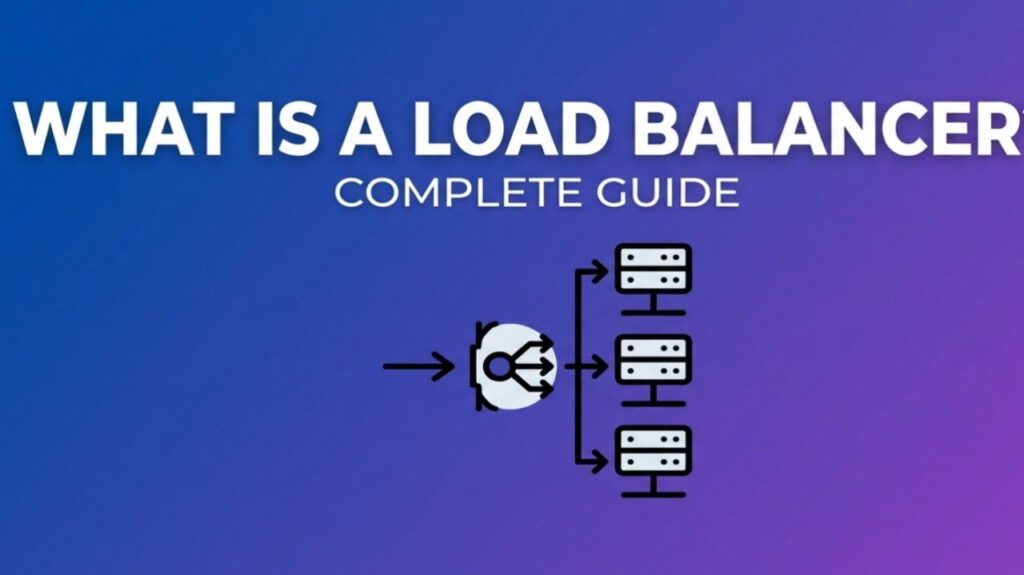
What is a load balancer – A load balancer is a networking device or software that distributes incoming traffic across multiple servers to ensure reliability, efficiency, and high availability of applications. It prevents any single server from being overwhelmed, improving performance and minimizing downtime.
How a Load Balancer Works
A load balancer acts as a traffic manager. When users send requests (like opening a website), the load balancer decides which server should handle each request.
- It checks server health.
- It routes traffic to the least busy or most capable server.
- It ensures users get fast, uninterrupted service.
Types of Load Balancers
- Hardware load balancer: Physical devices used in large enterprise setups.
- Software load balancer: Applications installed on servers, flexible and cost-effective.
- Cloud load balancer: Offered by cloud providers, scalable and managed automatically.
Benefits and Uses
- Improved performance: Distributes workload evenly.
- High availability: Keeps services running even if one server fails.
- Scalability: Easily add more servers as demand grows.
- Security: Can block malicious traffic before it reaches servers.
Also Read-What Is A Heat Dome
Example
Imagine an e-commerce site during a holiday sale. Thousands of users visit at once. Without a load balancer, one server could crash. With a load balancer, traffic spreads across multiple servers, keeping the site fast and reliable.
Load Balancer vs. Reverse Proxy
| Load Balancer | Reverse Proxy |
|---|---|
| Distributes traffic across servers | Routes requests to a single server |
| Focuses on performance & availability | Focuses on security & caching |
| Ensures no server overload | Protects servers from direct exposure |
FAQs : What is a load balancer
Is a load balancer necessary for small websites?
Not always. Small sites with low traffic may not need one, but growing sites benefit greatly.
Does a load balancer increase speed?
It doesn’t make servers faster, but it prevents overload, which keeps performance consistent.
Can cloud providers offer load balancing?
Yes. Services like AWS Elastic Load Balancing, Azure Load Balancer, and Google Cloud Load Balancing are widely used.
Is a load balancer the same as clustering?
No. Clustering combines servers to act as one, while load balancing distributes traffic among separate servers.