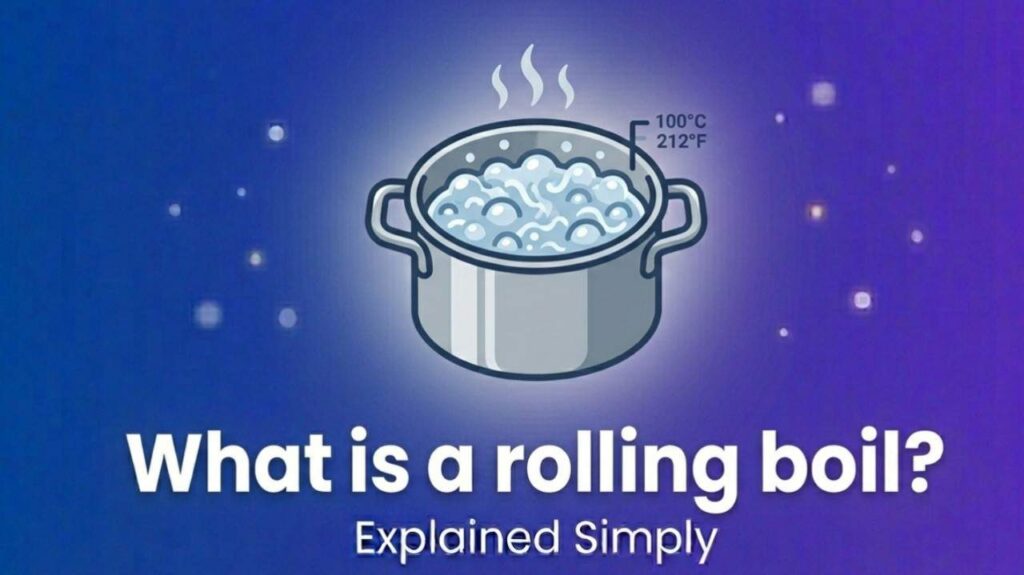
What is a rolling boil – A rolling boil is a vigorous stage of boiling where large bubbles continuously rise to the surface and break, even when the liquid is stirred. It indicates that water or another liquid has reached its maximum boiling point and will not get hotter without evaporating.
How a Rolling Boil Works
- Temperature: For water, it occurs at 100°C (212°F) at sea level.
- Appearance: Large, constant bubbles across the entire surface.
- Stability: Unlike a gentle simmer, the boil does not stop when stirred.
- Purpose: Ensures food cooks evenly and thoroughly, especially pasta, rice, or sterilization tasks.
Rolling Boil vs. Simmer
| Rolling Boil | Simmer |
|---|---|
| Vigorous bubbling | Gentle bubbling |
| 100°C (212°F) | 85–95°C (185–205°F) |
| Used for pasta, blanching, sterilization | Used for soups, stews, sauces |
| Cannot be stopped by stirring | Can reduce when stirred |
Benefits of a Rolling Boil
- Cooking efficiency: Ensures pasta or grains cook evenly.
- Sterilization: Kills bacteria in water or jars for canning.
- Consistency: Maintains heat for recipes requiring constant boiling.
Also Read-what is a query string
Examples
- Boiling pasta until al dente.
- Preparing potatoes for mashing.
- Sterilizing jars for homemade jams.
- Blanching vegetables before freezing.
FAQs : What is a rolling boil
How do I know when water is at a rolling boil?
When large bubbles rise continuously across the surface and stirring does not stop them.
Is a rolling boil hotter than a simmer?
Yes. A rolling boil is at the liquid’s maximum boiling point, while a simmer is slightly below.
Do I always need a rolling boil for cooking?
No. Some recipes, like soups and sauces, require a gentle simmer instead.
Can altitude affect a rolling boil?
Yes. At higher altitudes, water boils at lower temperatures, so a rolling boil occurs sooner but at less heat.