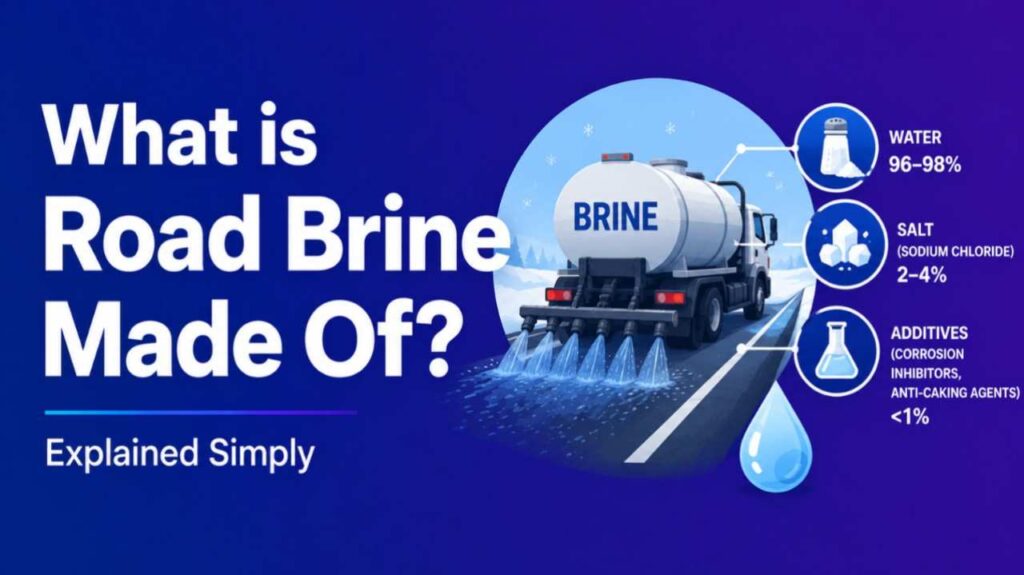
What is Road Brine Made Of – Road brine is a liquid mixture of water and salts, most commonly sodium chloride, calcium chloride, or magnesium chloride. It lowers the freezing point of water, preventing ice from bonding to road surfaces during winter storms. Some formulas also include organic additives like beet juice or molasses to improve performance and reduce corrosion.
How Road Brine Works
- Freezing Point Depression: Salt lowers water’s freezing point, keeping roads wet instead of icy.
- Pre-treatment: Brine can be applied up to 48 hours before a storm, preventing ice from bonding.
- Efficiency: Liquid brine begins working faster than solid rock salt.
Also Read-What is a DVM Vet
Types of Road Brine
| Type | Composition | Best Use Case |
|---|---|---|
| Sodium Chloride Brine | 23.3% NaCl + water | Standard winter conditions |
| Calcium Chloride Brine | CaCl₂ + water | Effective in colder sub-zero temperatures |
| Magnesium Chloride Brine | MgCl₂ + water | Works well in extreme cold |
| Organic-enhanced Brine | Salt + beet juice/molasses | Reduces corrosion, improves adhesion |
Benefits of Road Brine
- Prevents ice bonding to pavement.
- Cost-effective compared to rock salt.
- Environmentally friendlier (uses less salt overall).
- Improves safety by reducing slippery conditions.
FAQs : What is Road Brine Made Of
What is the exact ratio of salt to water in road brine?
Typically 23.3% salt to 76.7% water, measured with a salometer.
Why add beet juice or molasses to brine?
These organic additives help brine stick to roads longer and reduce vehicle corrosion.
Is road brine safer for the environment than rock salt?
It uses less salt, but chloride runoff can still harm soil and water. Alternatives like calcium magnesium acetate are being tested.
Can brine be applied to wet roads?
No, it must be applied to dry surfaces to be effective.