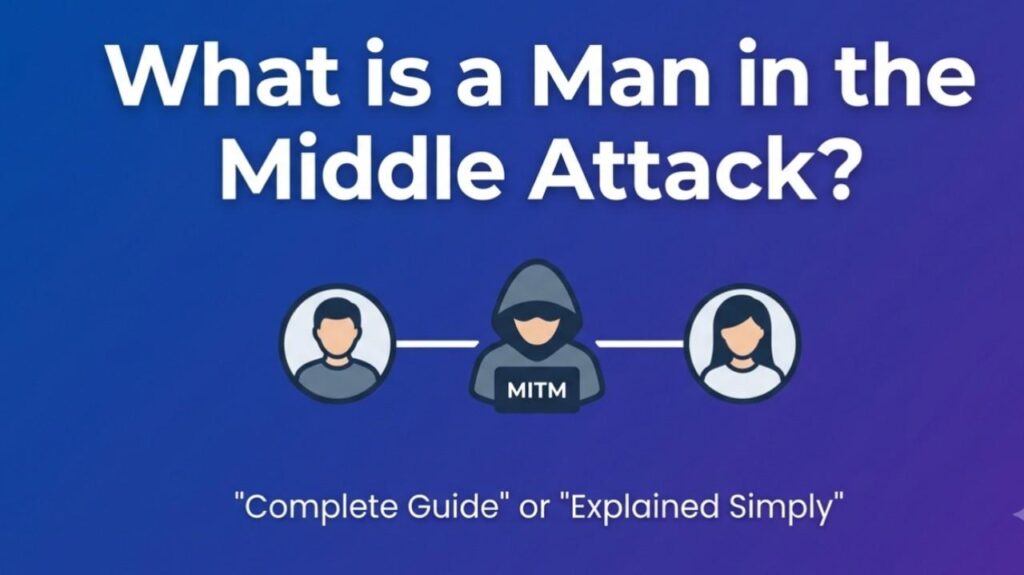
What Is A Man In The Middle Attack ? – A man-in-the-middle (MITM) attack is a cyberattack where an attacker secretly positions themselves between two parties who believe they are communicating directly. The attacker intercepts, relays, and sometimes alters the data exchanged, often to steal sensitive information like login credentials, credit card details, or personal messages.
How a Man-in-the-Middle Attack Works
MITM attacks typically involve two main phases: interception and decryption (or manipulation).
- Interception: The attacker diverts traffic so it passes through their system. They might create a fake Wi-Fi hotspot, poison network caches, or exploit weak protocols.
- Decryption/Manipulation: Once traffic flows through them, the attacker can read unencrypted data or break weak encryption. They relay messages to keep the conversation appearing normal while stealing or changing information.
Victims rarely notice because the attacker impersonates both sides convincingly.
Common Types of MITM Attacks
- Wi-Fi Eavesdropping: Attacker sets up a rogue access point with a legitimate-sounding name (e.g., “Free Airport Wi-Fi”) to capture data from connected users.
- ARP Spoofing: On local networks, the attacker sends fake ARP messages to redirect traffic through their device.
- DNS Spoofing (Cache Poisoning): Attacker corrupts DNS responses to send users to fake websites that look identical to real ones.
- Session Hijacking: Attacker steals session cookies after login to take over an active authenticated session.
- SSL/TLS Hijacking: Attacker downgrades secure HTTPS connections to insecure HTTP or presents fake certificates.
Also Read-What Is A Prepaid Meter ?
Real-World Examples
- Attackers have used rogue Wi-Fi at coffee shops or airports to steal banking details.
- In the 2011 DigiNotar breach, attackers issued fraudulent certificates and intercepted traffic to major websites.
- Email hijacking variants let attackers impersonate banks and request fund transfers.
How to Prevent Man-in-the-Middle Attacks
- Use HTTPS websites (look for the padlock icon) and avoid entering sensitive data on HTTP sites.
- Connect to public Wi-Fi only through a reputable VPN that encrypts your traffic.
- Enable multi-factor authentication (MFA) everywhere possible.
- Keep software, browsers, and operating systems updated.
- Avoid clicking suspicious links or connecting to unknown networks.
- Use strong, unique passwords and a password manager.
FAQs : What Is A Man In The Middle Attack ?
Can a MITM attack happen on a secure HTTPS site?
Yes, but it’s harder. Attackers may use fake certificates or try to downgrade the connection. Modern browsers warn about invalid certificates.
Are public Wi-Fi networks especially risky?
Yes. Unencrypted or poorly secured networks make interception much easier for attackers
How do I know if I’m under a MITM attack?
Signs include unexpected certificate warnings, slow connections, or unusual pop-ups. Tools like Wireshark can help advanced users inspect traffic, but prevention is better than detection.
Do VPNs protect against MITM attacks?
A good VPN encrypts your traffic end-to-end, making it very difficult for attackers to read or alter data in transit.
Who typically carries out MITM attacks?
Cybercriminals targeting financial data, hackers on public networks, and sometimes state actors for surveillance.