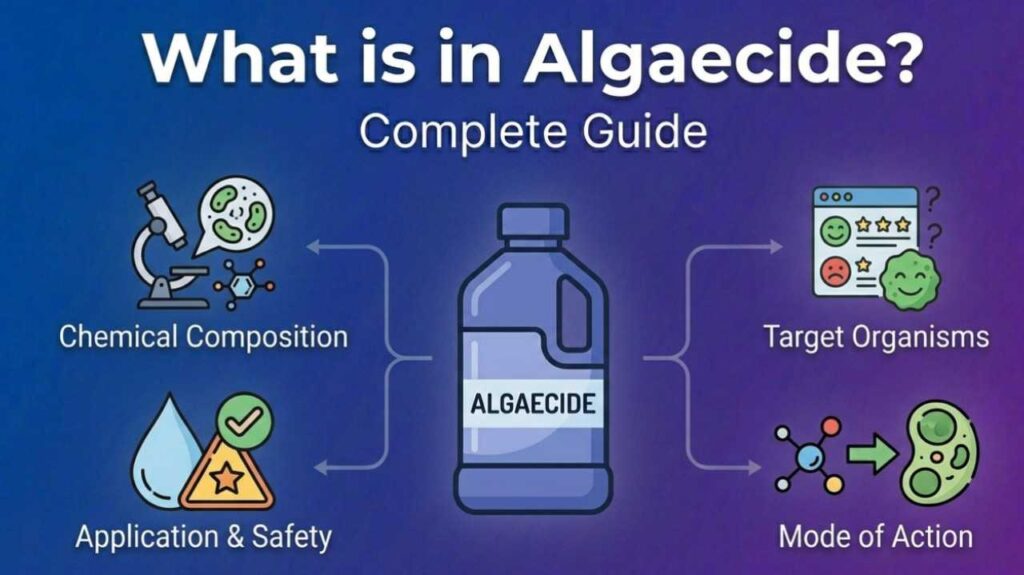
What is in Algaecide – A algaecide is a biocide formulated to control algae in pools, ponds, lakes, and water treatment systems. Its effectiveness depends on the active ingredients, which target algae cells through oxidation, membrane disruption, or inhibition of photosynthesis.
Common Ingredients in Algaecide
- Copper compounds
- Copper sulfate or copper carbonate.
- Inhibit algae cell growth and reproduction.
- Widely used in pools and reservoirs.
- Quaternary ammonium compounds (Quats)
- Surfactants that disrupt algae cell membranes.
- Effective against green algae in swimming pools.
- Polymeric biguanides (PHMB)
- Broad-spectrum antimicrobial agent.
- Kills algae by breaking down cell structures.
- Chlorine compounds
- Sodium hypochlorite or calcium hypochlorite.
- Oxidize algae cells, destroying proteins and DNA.
- Peroxygen compounds
- Hydrogen peroxide or sodium carbonate peroxyhydrate.
- Release oxygen molecules that damage algae cells.
How Algaecide Works
- Disrupts cell membranes → causes leakage and cell death.
- Blocks photosynthesis → prevents algae from producing energy.
- Oxidizes proteins/DNA → destroys essential cell functions.
- Prevents reproduction → stops algae blooms from spreading.
Also Read-What Is Cryptocurrency Mining
Examples of Use
- Swimming pools: Copper-based or quat algaecides prevent green algae.
- Ponds/lakes: Copper sulfate or hydrogen peroxide controls blooms.
- Industrial water systems: PHMB and chlorine compounds maintain sanitation.
FAQs : What is in Algaecide
Is algaecide safe for fish and plants?
Some types (like copper sulfate) can harm aquatic life if overdosed. Always follow dosage instructions.
Can algaecide replace chlorine in pools?
No, algaecide is preventive. Chlorine remains the primary sanitizer.
What’s the difference between copper and non-copper algaecides?
Copper algaecides are powerful but may stain surfaces; non-copper options (like quats or hydrogen peroxide) are gentler on pool finishes.
How often should algaecide be used?
Typically weekly in pools, or as needed in ponds and water systems.