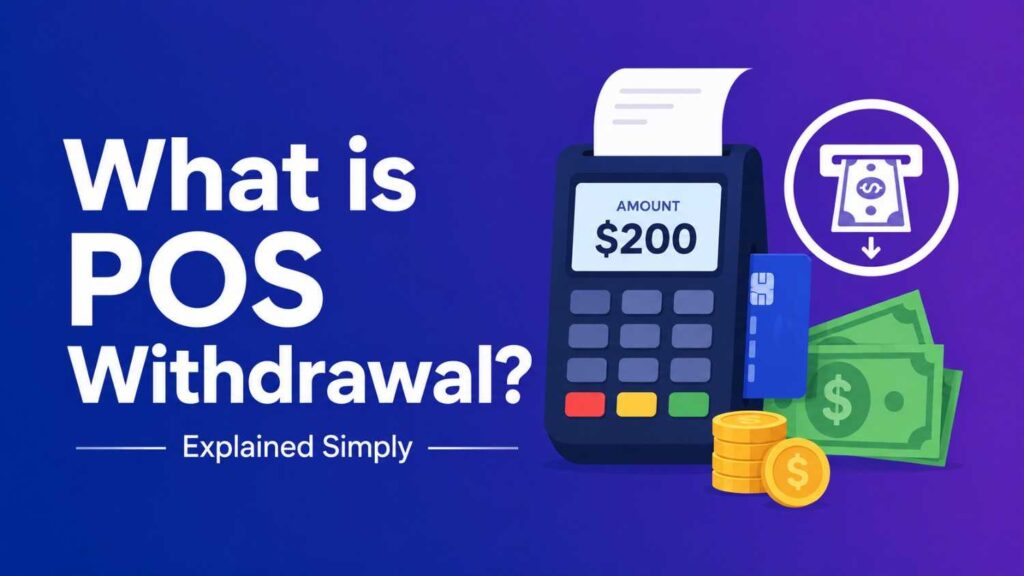
What is POS Withdrawal – POS withdrawal is the process of withdrawing cash at a merchant’s POS terminal using a debit card. Instead of going to an ATM, customers can request cash while making a purchase or even as a standalone transaction. The amount is debited from their account, and the merchant provides the cash.
How POS Withdrawal Works
- Step 1: Customer swipes or inserts their debit card at the POS machine.
- Step 2: Selects the “cash withdrawal” option.
- Step 3: Enters the desired amount and PIN.
- Step 4: Merchant hands over the cash, and the amount is deducted from the customer’s account.
Benefits of POS Withdrawal
- Convenience: Access cash while shopping, without searching for an ATM.
- Availability: Useful in areas with limited ATM coverage.
- Time-saving: Combines purchase and withdrawal in one transaction.
- Reduced ATM queues: Helps banks manage ATM traffic.
Also Read-What is the Difference Between a Permanent and Temporary Magnet
Examples of POS Withdrawal
- Supermarkets: Customers withdraw ₹500 while paying for groceries.
- Petrol stations: Drivers withdraw cash along with fuel payment.
- Retail stores: Shoppers request cash even without making a purchase (where allowed).
Comparison: POS Withdrawal vs ATM Withdrawal
| POS Withdrawal | ATM Withdrawal |
|---|---|
| Done at merchant POS terminal | Done at ATM machine |
| Requires merchant cooperation | Independent machine access |
| Often limited to small amounts | Larger withdrawal limits |
| Useful in rural/remote areas | Widely available in cities |
FAQs : What is POS Withdrawal
Is POS withdrawal free?
Many banks allow limited free transactions, but charges may apply beyond a set number.
What is the withdrawal limit?
Typically ₹1,000–₹2,000 per transaction in India, but limits vary by bank and country.
Do I need to make a purchase to withdraw cash?
Not always—some merchants allow standalone withdrawals, while others require a purchase.
Is POS withdrawal safe?
Yes, it uses the same PIN-based authentication as ATM withdrawals.