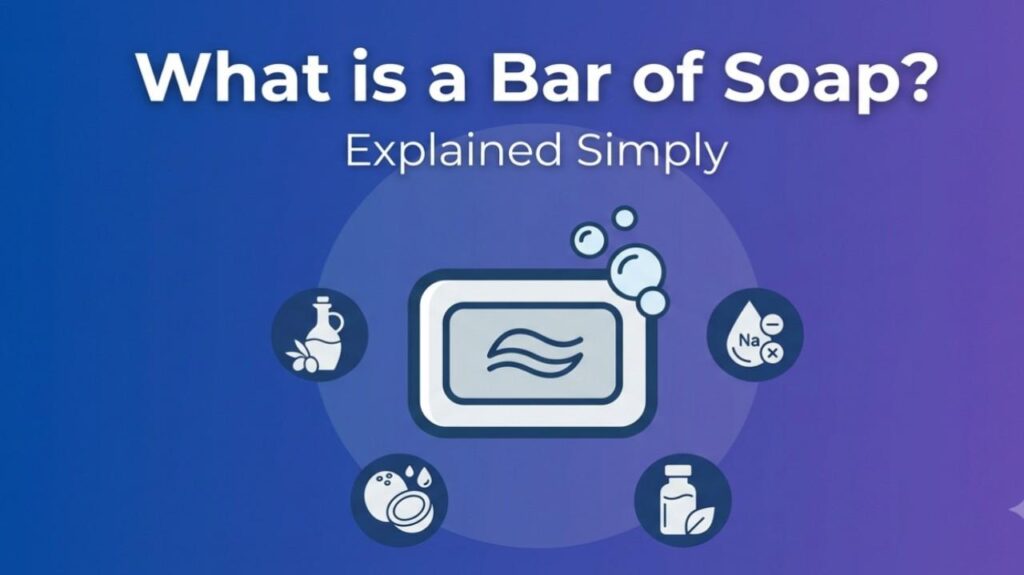
What Is a Bar of Soap Made Of – A bar of soap is primarily made of fats or oils combined with an alkali, usually sodium hydroxide (lye), through a chemical process called saponification. Most bars also contain water, fragrances, colorants, moisturizers, and other ingredients that improve cleansing, appearance, and skin feel.
What Is a Bar of Soap Made Of?
If you’re searching for what is a bar of soap made of, the simple answer is that soap is made by reacting fats or oils with an alkali.
This reaction creates soap molecules that can lift dirt, oil, and germs from the skin so they can be rinsed away with water.
While traditional soap has only a few ingredients, modern soap bars often include additional substances to enhance performance and fragrance.
How Soap Is Made
Soap is produced through a process called saponification.
During this process:
- Fats or oils are mixed with an alkali.
- A chemical reaction occurs.
- Soap and glycerin are formed.
- The mixture is molded and allowed to harden.
Once the reaction is complete, little to no lye remains in the finished soap.
Main Ingredients in a Bar of Soap
Fats and Oils
These form the foundation of soap.
Common examples include:
- Coconut oil
- Palm oil
- Olive oil
- Shea butter
- Animal fats such as tallow
Different oils affect the soap’s hardness, lather, and moisturizing properties.
Also Read-What is an EOC Test
Sodium Hydroxide (Lye)
Lye is the alkali used to turn fats and oils into solid bar soap.
Although it is essential during manufacturing, it is consumed during the saponification process.
Water
Water helps dissolve the lye and allows the ingredients to mix properly.
Much of the water evaporates as the soap cures.
Glycerin
Glycerin is a natural byproduct of soap making.
It helps attract moisture and can make soap gentler on the skin.
Additional Ingredients
Many commercial soap bars contain extra ingredients such as:
Fragrances
Added to create pleasant scents.
Colorants
Used to give soap a specific appearance.
Moisturizers
Examples include:
- Aloe vera
- Shea butter
- Cocoa butter
- Plant oils
Exfoliants
Some soaps include:
- Oatmeal
- Coffee grounds
- Pumice
- Salt
These help remove dead skin cells.
Types of Bar Soap
Traditional Soap
Made from fats, oils, and lye through saponification.
Moisturizing Soap
Contains added ingredients designed to reduce skin dryness.
Antibacterial Soap
Includes ingredients intended to reduce certain bacteria on the skin.
Exfoliating Soap
Contains particles that help scrub and cleanse the skin more deeply.
Why Soap Cleans So Well
Soap molecules have two ends:
- One end attracts water.
- The other end attracts oil and grease.
This unique structure allows soap to lift dirt and oils from the skin so they can be washed away.
Bar Soap vs. Synthetic Cleansing Bars
These products are often confused.
| Bar Soap | Synthetic Cleansing Bar |
|---|---|
| Made through saponification | Made with synthetic detergents |
| Uses fats and oils | Uses manufactured surfactants |
| Traditional soap chemistry | Different cleansing chemistry |
| Often contains natural glycerin | May contain added moisturizers |
Both clean effectively, but their ingredients differ.
FAQs : What Is a Bar of Soap Made Of
What is a bar of soap made of?
A bar of soap is mainly made from fats or oils, sodium hydroxide (lye), and water through a process called saponification.
Does bar soap contain lye?
Lye is used during manufacturing, but it is largely consumed during the soap-making process and is not present in significant amounts in properly made soap.
What oils are commonly used in soap?
Common oils include coconut oil, olive oil, palm oil, and shea butter.
What is glycerin in soap?
Glycerin is a natural byproduct of soap making that helps attract moisture and can make soap gentler on the skin.
Is bar soap natural?
Some bar soaps are made primarily from natural ingredients, while others contain synthetic fragrances, colorants, and additives.