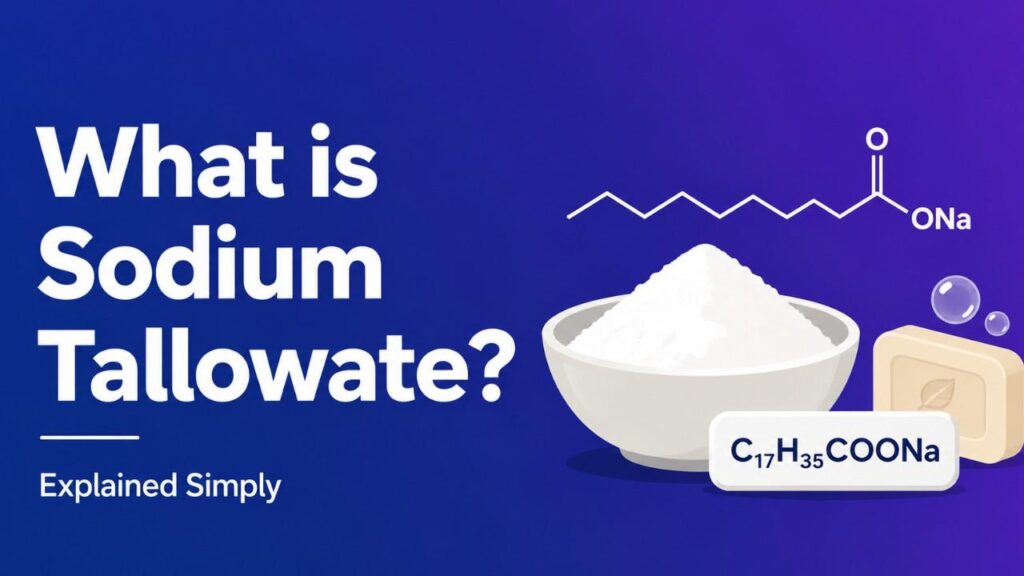
What is Sodium Tallowate – Sodium tallowate is a soap ingredient made by combining animal fat (tallow) with sodium hydroxide, resulting in a cleansing agent used in bar soaps and personal care products. It acts as a surfactant, helping water mix with oils and dirt so they can be rinsed away.
How Sodium Tallowate Works
- Production: Created through saponification, where tallow (animal fat) reacts with sodium hydroxide (lye).
- Function: Works as a surfactant, breaking down oils and lifting dirt from skin.
- Properties: Produces a firm, long-lasting soap bar with good lather.
Benefits / Uses
- Cleansing: Effective at removing oils and impurities.
- Durability: Makes soap harder and longer-lasting compared to plant-based alternatives.
- Lather quality: Provides a creamy, stable foam.
- Cost-effective: Widely used in commercial soaps due to affordability.
Also Read-What is the Conduit via Which the Neurological System Operates
Examples
- Found in traditional bar soaps like Ivory and other household brands.
- Used in laundry soaps for strong cleansing power.
- Common in personal care products where firm texture and rich lather are desired.
Comparison with Related Ingredients
| Ingredient | Source | Properties |
|---|---|---|
| Sodium Tallowate | Animal fat | Hard, durable soap with creamy lather |
| Sodium Palmate | Palm oil | Plant-based, similar hardness |
| Sodium Cocoate | Coconut oil | Produces more bubbles, softer soap |
FAQs : What is Sodium Tallowate
Is sodium tallowate vegan?
No, it is derived from animal fat. Vegan alternatives include sodium palmate or sodium cocoate.
Is sodium tallowate safe for skin?
Yes, it is generally safe and widely used, though sensitive skin may prefer plant-based soaps.
Why do some brands avoid sodium tallowate?
Ethical and dietary preferences (vegan, cruelty-free) lead some companies to use plant-based alternatives.
Does sodium tallowate affect soap quality?
Yes, it makes soap harder, longer-lasting, and provides a creamy lather.